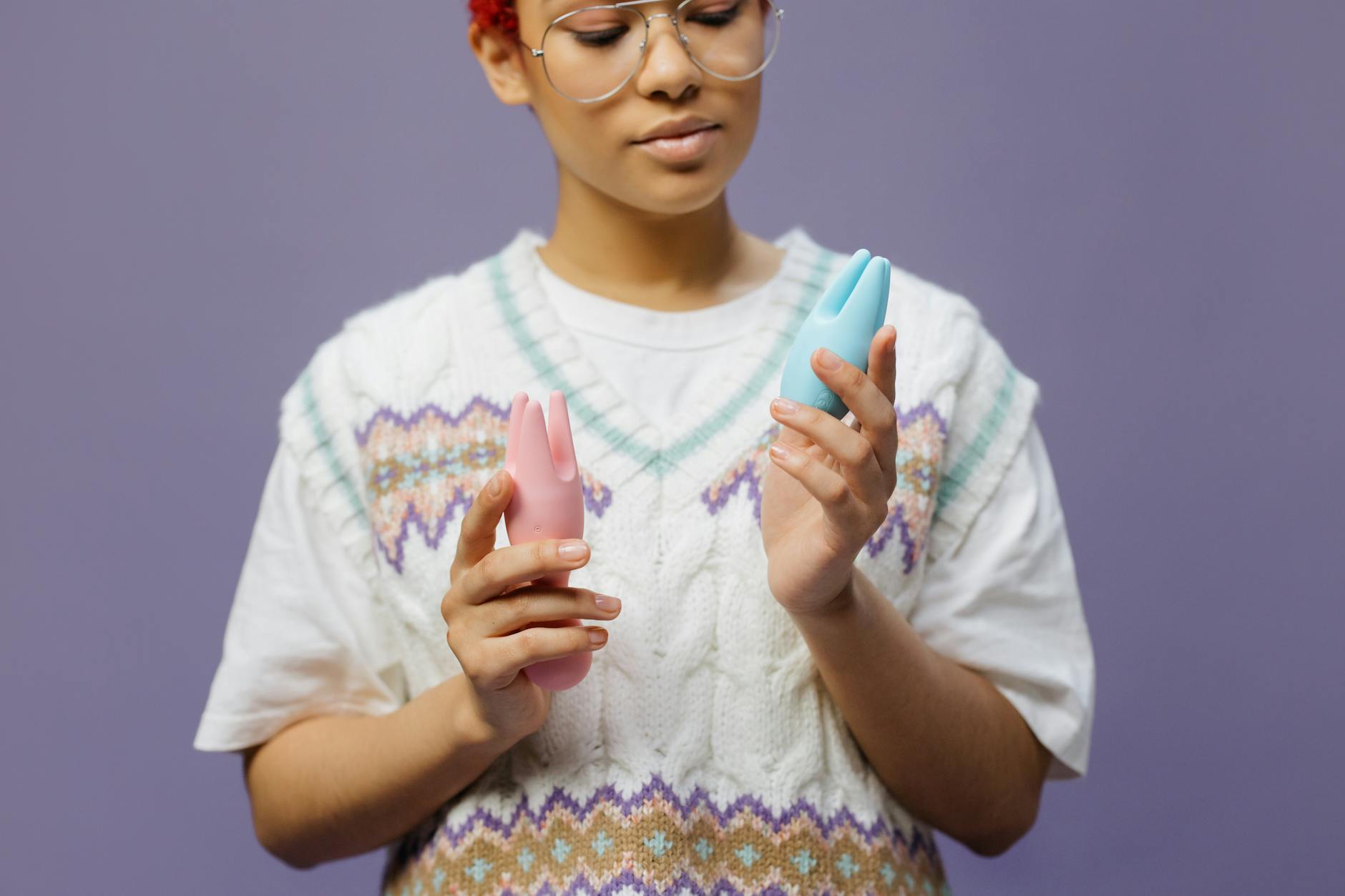
How to Use Lemon Vibrators When Antidepressants Affect Your Orgasm
Let's be real: antidepressants save lives. They also sometimes hijack your orgasm. Between 40 and 60 percent of people taking SSRIs report sexual side effects. Delayed orgasm, reduced sensation, lower desire. That's not a trade-off anyone signed up for, but it's the actual math of brain chemistry.
Here's what nobody tells you clearly: the problem isn't your body. It's not a failing or a permanent loss. The medication is working on your serotonin system in ways that blunt the neurological cascade that usually leads to climax. And there are real, practical workarounds.
Why antidepressants flatten sensation in the first place
SSRIs and SNRIs work by keeping serotonin hanging around longer in your synapses. That's why they steady your mood. But serotonin also plays a role in sexual response. Higher serotonin can slow arousal and make orgasm harder to reach. It's like someone turned down the volume on every signal your brain is trying to send your body.
The dopamine pathway gets muted too. Dopamine is the neurotransmitter of desire and reward. When your medication lifts serotonin, dopamine often takes a back seat. The result: you might feel interested in sex mentally, but your body isn't waking up the way it used to.
Tissue sensitivity also changes. Not dramatically. But enough that lighter touch doesn't register the way it once did. This is where most people get stuck. They assume the problem is them, when actually the problem is that standard vibration doesn't have enough oomph to break through the sensory fog.
Why lemon suction technology changes the equation
Traditional vibrators rely on rapid back-and-forth movement. That works brilliantly when your nervous system is tuned to respond. When antidepressants have dulled your sensitivity, traditional vibration becomes white noise. You feel it, technically, but it doesn't build into anything.
Lemon clitoral vibrators work through suction instead. They create a rhythmic pulse that stimulates nerve endings through pressure change, not friction. This activates a different neural pathway. Instead of surface-level vibration, suction draws blood to the area, which increases sensitivity from the inside out. It's not fighting the medication. It's working around it.
The Lem by Shop Lem Vibrator uses air-pulse technology specifically designed for this. People on antidepressants consistently report that suction-based stimulation works when traditional vibrators have stopped registering at all.
The practical setup that actually works
Timing matters more than you'd think. Antidepressants take 1-2 hours to peak in your bloodstream. Sexual side effects are usually worst then. Many people find that exploring pleasure an hour or two after they take their dose means fighting a fully medicated system. It's possible, but harder.
Instead, time it closer to when you'd normally take your next dose. Or explore in the morning if you take your dose at night. The medication is still in your system, but you're not at peak concentration.
Warmup also has to shift. Without medication, 5-10 minutes of foreplay might be enough. Now budget 20-30 minutes. Your body needs longer to generate arousal signals strong enough to break through the neurochemical fog. This isn't a flaw. It's just the new math.
Lubrication becomes non-negotiable. Even if you never needed it before, antidepressants can reduce natural lubrication slightly. Water-based lube helps the suction seal better and reduces any potential friction discomfort. It's not complicated. Just matters.
How to use a lemon vibrator when traditional methods have stalled
Start on the lowest setting. Most people's instinct is to crank intensity when they're not feeling much. That backfires. Lower settings on a suction device create more of a pulse. Higher settings create more of a vacuum. You want the pulse to build sensation gradually. Starting at level one or two lets you feel the suction begin to work without overwhelming your nervous system.
Position matters more than people usually think about. Angle the device so the opening creates a good seal. The seal is what makes suction work. Without it, you're just holding a vibrator against your body. Once you have a seal, you should feel a distinct suction rhythm. That's the technology working.
Move slowly. With lemon clitoral vibrators, the device does the work. You don't need to move it around constantly. Find the spot, hold it steady, and let the suction build sensation. Many people used to traditional vibrators make the mistake of moving too much and breaking the seal. Stay still. Let the pressure do the work.
If you're using it with a partner, communication matters even more than usual. Your partner might notice you're taking longer to build sensation or that you're enjoying a different kind of stimulation than before. That's information worth sharing out loud. "This is what's working for me right now" beats months of frustration or disconnection.
When sensation starts returning, adjust your approach
Some antidepressants cause side effects that plateau after a few months. Others persist for years. Some reduce with dose adjustment. A lot depends on the specific medication and your individual neurology.
If your sensation does start returning, the lemon vibrator becomes even more effective. Your nervous system can work with the suction technology, and you'll probably reach orgasm faster than before. This isn't a reason to stop using it. It's just confirmation that it's working.
Many people who found suction technology during a medicated period keep using it afterward. That's fine. Your body doesn't forget what works.
Talking to your doctor about it (the conversation nobody wants to have)
If sexual side effects are significantly affecting your quality of life, your doctor actually needs to know. I know that conversation feels awkward. It's worth it anyway. Options include:
Dose adjustment. Sometimes a slightly lower dose preserves the mood benefit while reducing sexual side effects. This isn't always possible, but it's worth asking.
Switching medications. Some SSRIs have lower rates of sexual side effects than others. Sertraline tends to be rougher on this front. Bupropion is gentler. If you've been on the same medication for years, switching might be worth discussing.
Adding something on top. Some doctors prescribe buspirone or other medications to counteract sexual side effects. They're not magic, but they help some people.
None of those options. And honestly, that's often where people land. Your mental health stability might matter more than perfect sexual function right now. That's a real trade-off, not a failing.
That's where tools like lemon suction vibrators come in. They're not fixing the medication's chemistry. They're giving your body a workaround that actually works.
The bigger picture: pleasure isn't supposed to disappear
Antidepressants are vital medicine for a lot of people. And the sexual side effects are real, frustrating, and worth taking seriously. The narrative that you just have to accept flattened pleasure isn't accurate. You deserve actual solutions.
Using a lemon clitoral vibrator when antidepressants have dulled your response isn't settling. It's adapting. It's taking your brain chemistry seriously and finding tools that work with it instead of against it.
If you're exploring this for the first time, start with lower intensity and longer warm-up time. Give the suction technology a genuine chance to work. Most people find that within a few sessions, they've figured out what their body needs on medication. From there, pleasure usually comes back online.
You don't have to choose between your mental health and sexual satisfaction. You just have to be willing to approach it differently.
People also ask
Can I use a lemon vibrator while taking antidepressants?
Completely yes. There's nothing unsafe about using any vibrator, including lemon clitoral vibrators, while on antidepressants. The medication doesn't interact with the device. What sometimes happens is that standard vibration doesn't feel like much when your sensation is muted by medication. Lemon suction vibrators work better in this specific scenario because they activate different nerve pathways than traditional vibration. If you're on an SSRI or SNRI and traditional vibrators haven't been doing the trick, suction-based technology is worth trying.
How long does it take for a lemon vibrator to work if I'm on SSRIs?
Some people feel the difference within the first session. Others need 2-3 tries to understand how to use suction technology effectively. The key is figuring out the seal, starting on lower intensity, and giving yourself a full 20-30 minute session. Your body learns. By session three or four, most people have a clear sense of whether this technology is going to work for them.
Should I tell my doctor I'm using a vibrator?
That's completely your call. Your doctor doesn't need a product inventory of your intimate life. But if sexual side effects from your medication are affecting your wellbeing, that conversation is worth having. A good doctor will focus on solutions like dose adjustment or medication switching rather than judging your choices. If a doctor responds poorly to you mentioning that medication has affected your sexual function, that's useful information about the quality of care you're getting.
Does using a lemon vibrator mean I won't experience natural orgasm again?
Not at all. Using a device while on medication doesn't rewire your ability to respond to other forms of stimulation. If your sensation is returning or if you're exploring with a partner, those experiences will still be available to you. The vibrator is a tool, not a replacement system. Think of it the way you'd think about reading glasses. They help you see better in one context. They don't change your eyes permanently.
What if a lemon vibrator doesn't help my antidepressant side effects?
Then you've gathered useful information. Different bodies respond to different technologies. Some people find that traditional vibration works fine even on medication. Some need suction. Some find that the issue is really about desire, not sensation. If lemon clitoral vibrators aren't working, the next conversation is with your doctor about whether medication adjustment makes sense. And you know you've tried a thoughtful workaround first, which matters.
Can I use lube with a lemon vibrator if I'm on antidepressants?
Absolutely. Water-based lubricant actually makes suction devices work better. It helps the seal and reduces friction. Silicone-based lubes can damage silicone toys, so stick with water-based. More lubrication, better seal, better results. That's the math here.
The takeaway
Antidepressants change how your nervous system processes pleasure. That's the reality. But that doesn't mean pleasure has to disappear. Lemon vibrators and other suction-based technologies are designed to work with medicated nervous systems, not against them. If you're exploring this space for the first time, check out our guide on choosing the right lemon clitoral vibrator. And if sexual side effects are significantly impacting your life, the conversation with your prescriber is worth having too. You get to have both. Mental health and pleasure. It just might look different than it did before.