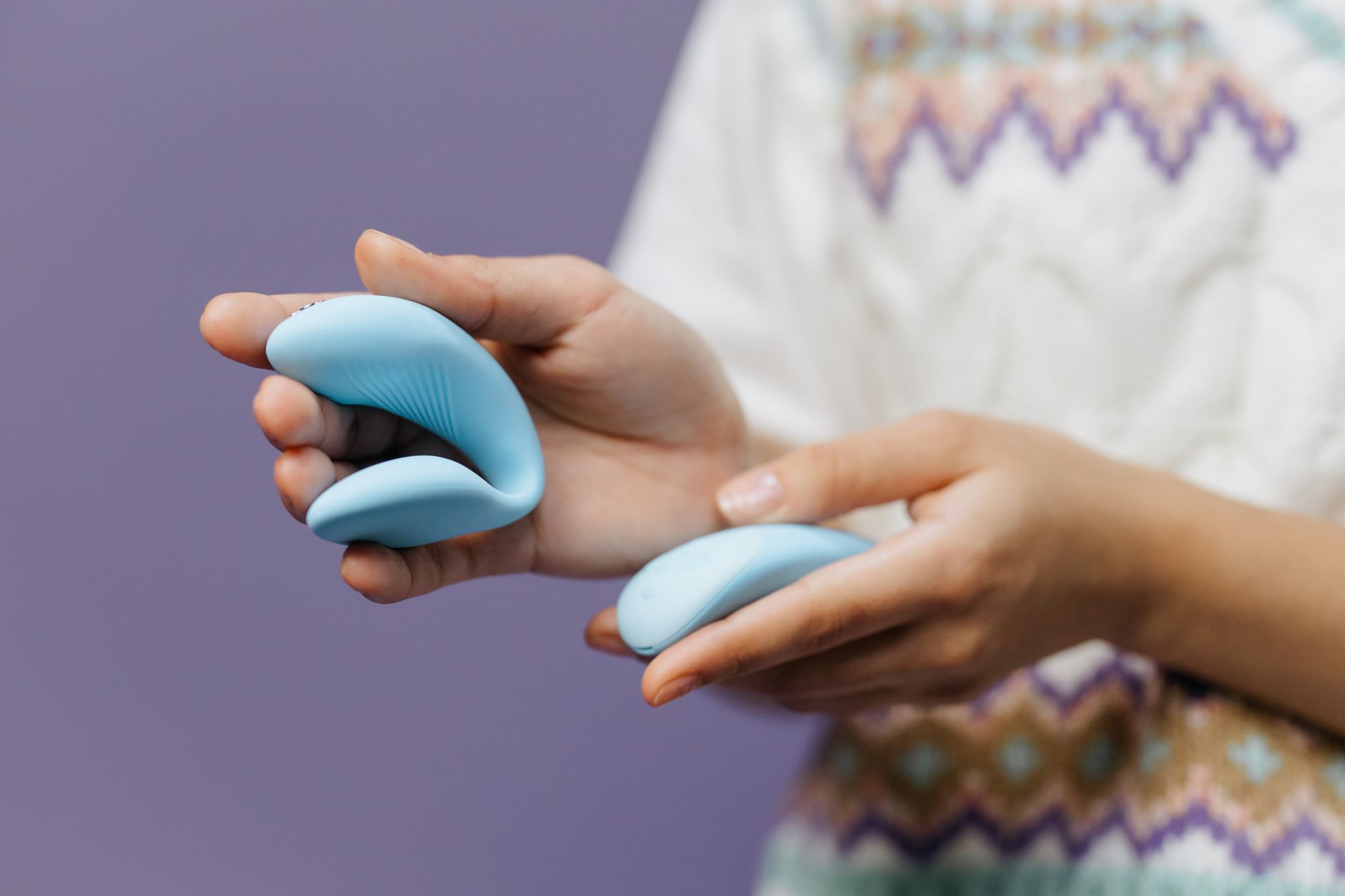
When you haven't touched yourself in forever, it gets weird
Let's start here: the gap doesn't have to be dramatic to feel significant. Whether you took a break because of stress, illness, caregiving, grief, a relationship, or just plain lost interest, the silence becomes its own kind of barrier. Your body feels like someone else's apartment. You don't know where the light switches are anymore. And the thought of finding pleasure there again can feel less exciting and more like a project you're not sure you want to start.
Here's what I've seen work again and again in my practice: the lemon clitoral vibrator method. Not because there's magic in the device itself, but because lemon vibrators are designed in a way that makes rebuilding sexual confidence feel possible instead of overwhelming.
Why long breaks mess with your confidence (and your body)
When you step away from sexual pleasure for a while, a few things happen in parallel. Your pelvic floor can tighten from disuse or from the unconscious tension of anticipating that you "should" want sex but don't. Sensation becomes distant. Your nervous system forgets that pleasure is safe. And your brain starts treating your own body like private property you've lost the key to.
Add to that the psychological piece: shame, doubt, or the grinding anxiety that you've somehow lost the ability to come. I hear this constantly. "I used to be able to orgasm easily." "Now I don't even know if I remember how." The gap creates a narrative, and the narrative creates more gap.
The good news? Your body hasn't gone anywhere. The neural pathways are intact. The clitoral nerve density is unchanged. You're not broken. You're just out of practice, and practice is the solution.
Why lemon vibrators specifically work for confidence rebuilding
Most vibrators are relentless. They work by sheer mechanical intensity. That can be wonderful when you're already aroused and confident. It's less wonderful when you're tentatively approaching your own body like you're meeting it for the first time.
Lemon clitoral vibrators use air-suction technology, which means the sensation is more like a gentle rhythmic massage than a buzzing against your skin. That distinction matters when you're rebuilding. The experience feels less clinical and more sensual. It's easier to stay present when the stimulation doesn't feel aggressive.
Here's the other part: the Lem's smaller size and intuitive interface make it feel less intimidating. You control the patterns and intensity. You're not fighting to find the right angle. You're not overwhelmed by a tool that feels like it was designed for someone else's body. It's proportionate, responsive, and lets you go slow.
How to start when you're genuinely nervous
The biggest mistake people make when they're returning to pleasure is treating it like a performance test. You get the device, you set aside time, you try to have an orgasm, and when it feels weird, you quit. That's backward.
Instead, think of this as reacquaintance. Three concrete steps that actually work.
Step 1: Start with clothing on. Yes, fully clothed. Hold the Lem over your underwear for a minute or two. Let your nervous system adjust to the sensation without the pressure of "this should lead somewhere." This sounds silly. It's not. This is how you signal to your brain that pleasure is safe and doesn't have a deadline.
Step 2: Set a time limit. Five minutes. Not thirty. Not "until I come." Just five minutes of exploration with zero performance expectation. When the timer goes off, you're done. This removes the pressure that kills arousal before it starts.
Step 3: Use lube. Even if you don't think you need it. Water-based lube makes everything feel better during a long break, and it removes the shame narrative if your body isn't responding with lubrication yet. That response comes back faster than you'd think.
The psychology of taking it slow with a lemon vibrator
I work with couples and individuals through relationship transitions. One pattern I see repeatedly: pleasure doesn't come back because you approach it like a chore you're trying to complete. The second you introduce a little slowness and self-compassion, everything shifts.
Lemon clitoral vibrators are tools for slowness. They encourage you to stay in your body. The air-suction sensation is specific enough to focus on but gentle enough that you don't need to brace yourself against it. This creates what I call "cognitive space." You're not so overwhelmed by sensation that you can't also be curious. You're not so understimulated that you're bored.
That cognitive space is where confidence rebuilds. You notice what feels good. You try a different pattern. You realize you're still capable of pleasure. These aren't big orgasmic revelations. They're smaller, truer ones. And they're cumulative.
From solo exploration to reconnecting with a partner
If you're eventually returning to partnered sex, solo practice with a lemon vibrator is actually one of the best stepping stones. You learn your body's signals again. You remember what arousal feels like. You practice being present with sensation without performance pressure.
When it comes time to involve a partner, you're already partway there. You can show them what works. You can ask for patience during arousal (which may take longer after a break). You're not starting from zero confidence. You're starting from "I know my body can feel good. Now let's build from there."
If you're experiencing tension around partnered sex after a gap, our guide on how to use lemon clitoral vibrators when desire returns after emotional distance covers that transition in more depth.
Common fears when you're starting again
"It won't work on me anymore." It will. Your clitoris is still there. The nerve endings are still responsive. What changes is usually tension and disconnection, both of which dissolve with gentle, consistent practice.
"It'll feel awkward and clinical." At first, maybe a tiny bit. The awkwardness passes faster if you commit to five-minute sessions over two weeks rather than trying to force a twenty-minute session where you're anxious the whole time.
"I'll be the weird one for needing a toy to get back into it." You won't. Most people who take a break from pleasure find that coming back alone first, in their own time, with a device they control completely, is not just easier but genuinely better than jumping back into partnered sex immediately.
When a lemon vibrator becomes a confidence ritual
After a few weeks of consistent practice, something shifts. Your body stops feeling foreign. You start having thoughts during the experience like "Oh, that's interesting" instead of "Is this working?" Your nervous system learns that pleasure is safe again.
At that point, a lot of people tell me that using the lemon vibrator becomes part of their confidence practice. Not because they need it to have an orgasm, but because it's a way of saying to themselves: "I deserve this. My body deserves this. I'm worth the time."
That's when you know you've actually rebuilt something. It's not about the orgasm. It's about the conversation you're having with yourself and your body. A conversation that says, "I'm coming home."
FAQ: Rebuilding sexual confidence after a break
How long does it usually take to feel confident again?
It varies, but I see most people shift their internal narrative within three to four weeks of consistent practice. That doesn't mean you're fully "back" to wherever you were before. It means the anxiety eases and curiosity returns. Real confidence takes a bit longer, maybe two to three months. But the anxiety piece? That lifts faster than you'd expect.
Is it normal if I don't orgasm the first few times?
Completely normal. Orgasm is actually the last thing to come back when you're rebuilding. Sensation comes first, then arousal, then pleasure, then orgasm. If you're chasing the orgasm, you skip the earlier steps that make it actually happen. Focus on whether the experience felt good and present, not on the climax.
Should I tell my partner I'm using a lemon vibrator to rebuild?
That depends on your relationship and your comfort. Some people prefer to do the early rebuilding solo and then introduce it to partnered time. Others find that vulnerability with a partner is actually what rebuilds the connection. There's no universal answer, but I will say this: dishonesty about pleasure rebuilding usually makes the process slower, not faster.
What if I still can't orgasm after a few weeks?
There's a difference between "the anxiety is lifting but orgasm still isn't there" and "nothing is shifting at all." If it's the former, keep going. You're on the right track; orgasm is just the last domino to fall. If it's the latter, something else might be in the way. This could be medication, a medical condition, deeper psychological blocks, or just that you need a different approach. It's worth checking in with a therapist or doctor at that point.
Can I use a lemon vibrator if I have trauma around sex?
With care and intention, yes. The gentleness of the air-suction technology makes it a good choice for trauma recovery because you control the intensity and pacing completely. But this is one where working with a trauma-informed therapist alongside solo exploration is actually the best path. Our article on how to use lemon vibrators when recovery from trauma rebuilds pleasure has more specific guidance on that process.
What if I feel guilty about returning to pleasure?
Guilt about self-pleasure is so common, and it usually comes from one of three places: cultural or religious conditioning, the belief that pleasure is selfish, or the remnants of a relationship where your desires weren't honored. A lemon vibrator is a tool, but honestly, the real work is the conversation you have with yourself about whether you actually deserve to feel good. I'd suggest pairing your practice with some reflection on where the guilt is coming from. You can't rebuild confidence while you're also quietly telling yourself you don't deserve it.
The real thing that changes
Rebuilding sexual confidence after a long break isn't really about the vibrator. It's about consistency, self-compassion, and a willingness to be curious about your own body again. The lemon clitoral vibrator just makes that process gentler and more accessible. It's a tool that meets you where you are instead of asking you to meet it where it is.
Your body hasn't forgotten how to feel good. You're just remembering. And that's worth taking slow.