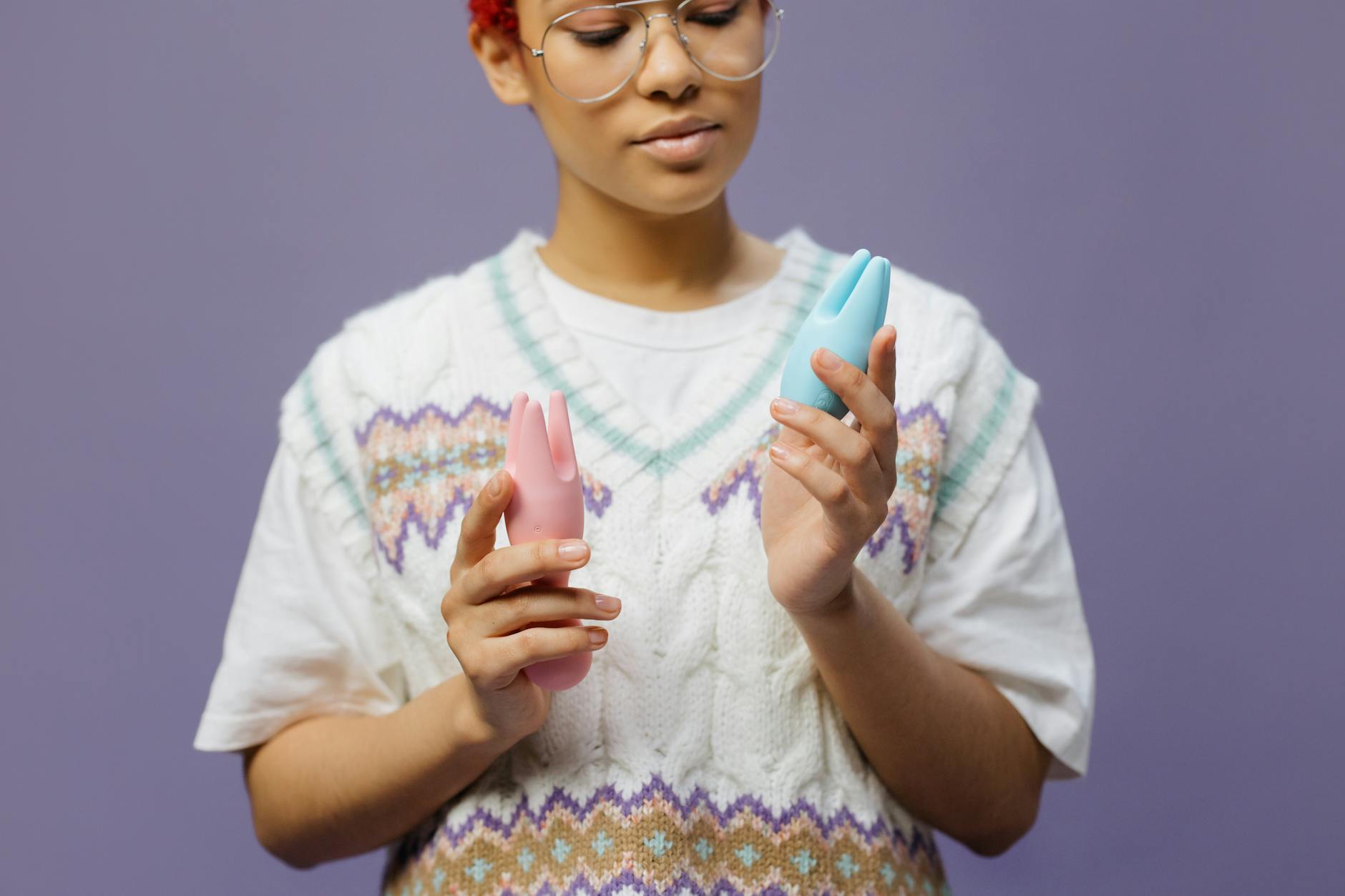
Here's what nobody tells you about birth control and pleasure
Hormonal birth control doesn't kill your libido. But it does change the landscape. The pill, patch, ring, or shot alters the baseline dose of estrogen and progestin your body produces. That shift touches arousal speed, lubrication, sensation intensity, and how easily you reach orgasm. For some people, those changes are subtle. For others, they're noticeable enough to wonder if something's broken.
Nothing is broken. Your body is simply operating under different chemical conditions. And once you understand what's shifted, you can adapt your practice with lemon clitoral vibrators to work with your new baseline instead of fighting it.
I've worked with hundreds of people navigating this exact friction. Here's what I've learned.
What hormonal birth control actually changes
First, the science. Hormonal contraceptives suppress the hormones your ovaries would naturally produce. In their place, they deliver steady, synthetic doses of estrogen and progestin. That consistency is why they prevent pregnancy so reliably. It's also why they flatten the cyclical peaks and valleys you might have felt before.
For pleasure, three things happen:
Lubrication often decreases. Estrogen helps maintain cervical mucus and vaginal tissue moisture. With a lower effective estrogen level (especially with progestin-only methods), natural lubrication can drop 20 to 40 percent. That doesn't mean you're dry forever. It means warm-up matters more, and supplemental lube becomes genuinely helpful, not optional.
Arousal takes longer to build. The hormonal fluctuations in a natural cycle create micro-peaks in desire around ovulation. Birth control flattens those peaks. Many people report that arousal feels more like a dimmer switch than a light switch. You're not less capable of getting turned on. You just can't count on the automatic speed you might have felt mid-cycle.
Orgasm intensity can shift. For some people, orgasms feel softer or less intense. For others, they feel more consistent and less dependent on perfect conditions. The variability is real. Progestin-dominant pills tend to have a stronger dampening effect than estrogen-dominant ones.
What doesn't change: your nerve endings, your brain's capacity for pleasure, or your ability to orgasm. Clitoral sensation is controlled by pelvic nerves, not reproductive hormones. You're still absolutely capable of intense pleasure.
Why your lemon sucker might feel different on the pill
If you've been using a lemon clitoral vibrator or other suction-based toy before starting birth control, you might notice that the experience shifts slightly. The suction mechanism depends on good tissue engorgement and sensation. With lower baseline estrogen, tissues can feel a touch less full, and the initial sensation might require a slightly longer warm-up.
This is worth knowing because it prevents the frustration of thinking something is wrong with your body or your toy. Neither is true. Your body is running on different fuel.
The good news: lemon vibrators and suction toys actually adapt really well to this shift. Because they don't rely on deep vaginal penetration or friction, they work equally well whether tissues are at peak engorgement or slightly more modest. The suction mechanism stays just as effective.
The warm-up protocol that actually works
Here's the practical shift. When you were operating on a natural cycle, a 5-to-10-minute warm-up might have been enough. On hormonal birth control, budget 15 to 20 minutes for arousal to really build.
That warm-up doesn't have to be alone time with a toy. It can be foreplay with a partner, solo exploration, porn or erotica that works for you, fantasy, or just extended kissing and touch. The point is to let your body gradually shift into a state of readiness rather than expecting instant response.
Once arousal is actually there (not just initiated, but genuinely present), your lemon vibrator will perform exactly as you'd expect. The suction will feel strong, sensation will be clear, and orgasms will come through.
One specific tactic: start at a lower intensity setting than you might have used before. If you used pattern 4 or 5 on your device before, try pattern 2 or 3 during the warm-up phase. Work your way up. This prevents overstimulation and actually helps arousal build more naturally.
Lubrication, which is not a sign of failure
I want to be direct about this because shame around supplemental lube is genuinely real and genuinely unnecessary. Using lube while on hormonal birth control is not a failure. It's not a sign that something is wrong with you. It's a reasonable adaptation to a physiological shift.
Water-based lubricant is your friend here, especially if you're using silicone toys like the lemon vibrators from Hello Nancy. Water-based lubes are compatible with all toy materials, wash off easily, and reactivate with a little moisture. Silicone-based lubes feel richer but can degrade silicone toys over time, so stick with water-based.
The secondary benefit: lube actually enhances sensation. It reduces friction and allows for smoother, more comfortable contact. Many people who add lube to their practice report stronger, more consistent orgasms even when taking hormonal birth control. It's not a workaround. It's an upgrade.
Cycle tracking still matters, even on the pill
Here's something counterintuitive. Even though hormonal birth control suppresses your natural cycle, your desire and sensation don't become completely flat. Most people still experience subtle fluctuations. They're just smaller and less dramatic than they would be off hormones.
If you're on a combined pill (estrogen plus progestin), you typically get a slight dip in desire during your hormone-free week. That's when your body isn't receiving synthetic hormones. For many people, the few days right after restarting the pill can feel like a small uptick in arousal. Again, not huge, but noticeable if you're paying attention.
Progestin-only methods (the mini-pill, the implant, the IUD) tend to flatten desire even further because there's no on-off cycle. If you've switched from a combined pill to a progestin-only method and noticed a more pronounced shift, that's exactly why.
The practical takeaway: pay attention to your own pattern. Track not just your period but when you feel most and least interested in pleasure. That information is gold for planning solo sessions or intimate time with partners.
When to talk to your doctor
If you've been on the same birth control for three months and arousal still hasn't stabilized, that's worth mentioning to your prescriber. Some people adapt fully within a month. Others need two to three months. After that window, if desire or sensation feel dramatically suppressed, a different formulation might be worth trying.
Estrogen-dominant pills (where the estrogen component is higher relative to progestin) tend to have less impact on desire than progestin-dominant ones. If you're on a progestin-heavy pill and struggling, a switch to a more balanced formula might help.
You're not complaining about nothing. Pleasure and desire are legitimate health markers. Any gynecologist or family medicine doctor trained in contraceptive counseling will take this seriously. And switching methods is not failure. It's finding what works for your body.
Building a new baseline
What I tell people in my practice is this: your capacity for pleasure didn't disappear when you started hormonal birth control. It shifted. And once you adjust your expectations and techniques to meet your new baseline, pleasure is often just as rich, just as available, just as powerful.
Many people actually report deeper satisfaction once they stop fighting the shift and start working with it. Because when you slow down your warm-up, pay attention to lubrication, and give your body permission to need a little more time, you often end up more present and more connected to what's actually happening. That presence changes everything.
Your lemon clitoral vibrator is still your tool. Your body is still capable. The formula is just slightly different. Once you nail that formula, pleasure becomes consistent, predictable, and strong.
People also ask
Does hormonal birth control permanently reduce sensitivity to clitoral vibrators?
No. The sensitivity is still there. What changes is baseline arousal speed and tissue engorgement, not nerve sensation itself. Once you're actually aroused, your lemon vibrator will feel just as effective as it did before birth control. The shift is in how long it takes to get there, not in what happens once you arrive.
Can I use the same vibrator settings on birth control as I did before?
Maybe, but starting lower and working up is usually smarter. On hormonal birth control, tissues can be slightly less engorged during early arousal. Starting at a lower intensity prevents overstimulation and helps arousal build more naturally. Once you're fully aroused, you can absolutely increase intensity as usual.
Will switching birth control methods change my pleasure again?
Likely yes. Different methods deliver different hormone ratios. Switching from a combined pill to a progestin-only method, or vice versa, can feel like another adjustment period. The good news is you know how to adapt now. Budget extra warm-up time, use lube, pay attention to your own pattern, and give yourself three months to settle in before deciding if it's the right fit.
Is it normal for orgasms to feel less intense on birth control?
Yes, it's normal for some people. Progestin can have a mild dampening effect on orgasm intensity. That said, not everyone experiences this, and for some people, consistency matters more than intensity. If the change bothers you, mention it to your doctor. There are other options.
Should I stop using my lemon vibrator and give my body a break?
Not at all. Your vibrator isn't the problem. The shift is hormonal, not mechanical. Using your lemon clitoral vibrator while on birth control is completely safe and normal. In fact, maintaining a regular pleasure practice can actually help your body stay responsive and can make arousal easier overall.
Can lube actually improve sensation, or does it just mask dryness?
Both. Lube reduces friction, which makes contact smoother and more comfortable. That smoothness actually enhances sensation for many people because there's less irritation and more focused stimulation. It's not a mask. It's a genuine upgrade to how sensation travels through the tissues.
Resources and reading
If you want to go deeper into how hormones affect sexual response, the research is solid and accessible. The book "Come As You Are" by Emily Nagoski explores arousal mechanics beautifully. The American College of Obstetricians and Gynecologists (ACOG) has published research on hormonal contraception and sexual function that's worth reading if you're curious about the science. And your own doctor is a real resource. If they dismiss your concerns about pleasure and birth control, that's a signal to find a different provider.
Your pleasure matters. Your body matters. And finding the right tools and techniques to make pleasure accessible on hormonal birth control isn't optional. It's self-care that counts.