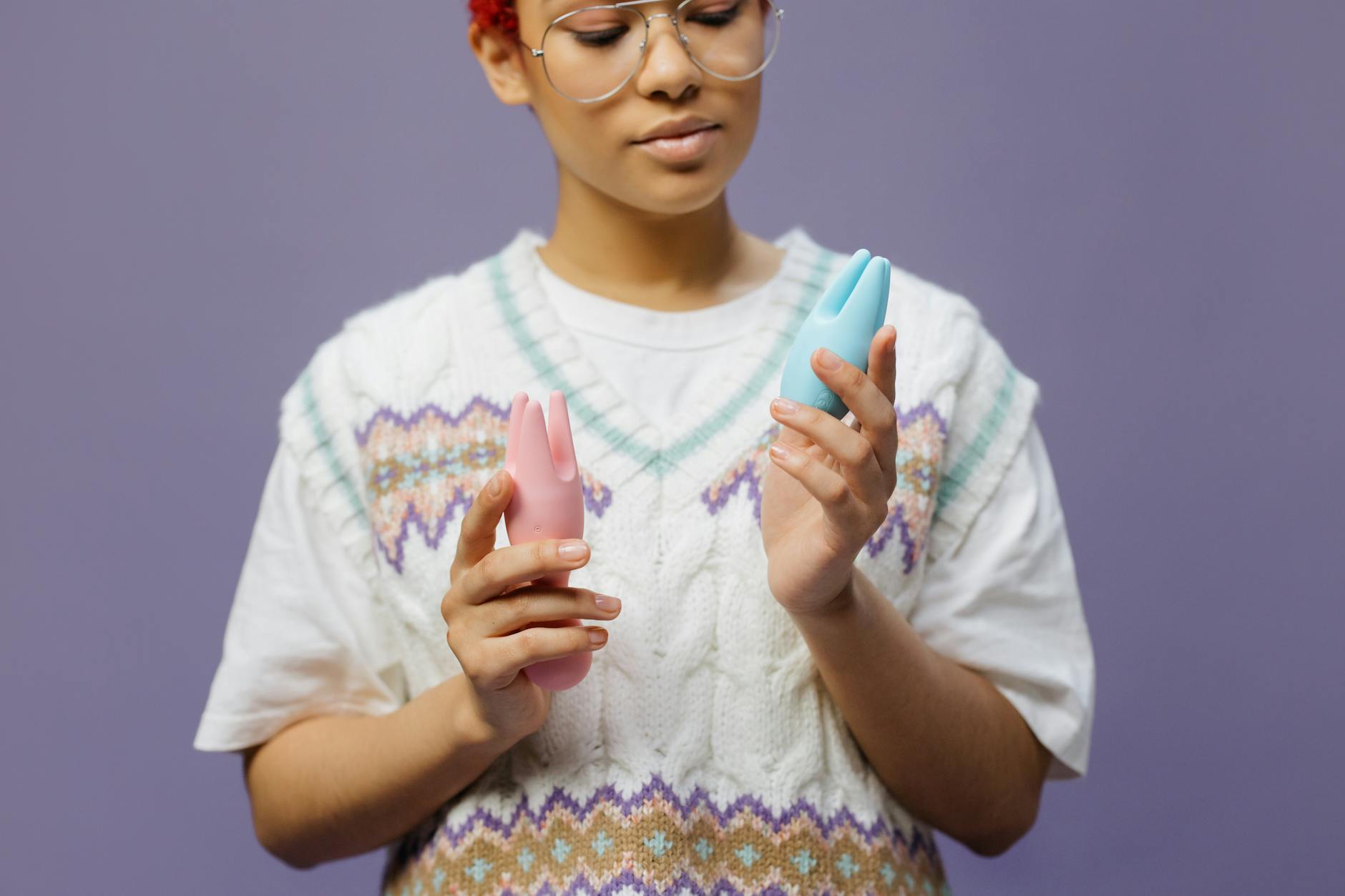
The thing nobody tells you about new relationships and toys
You've found someone you actually like. The chemistry is there. And now you're wondering: when do I mention that I use a clitoral vibrator? Or worse: how do I ask them if they'd be interested in using one together?
Here's what I hear from clients in this exact spot. They say the conversation feels bigger than it is. They imagine rejection, judgment, or their new partner feeling inadequate. They worry the toy makes them seem "difficult to please" or "not satisfied" with partnered sex alone. None of that is true, but the anxiety is real. The good news: this conversation, when timed right and approached honestly, actually deepens trust. It's not a risk. It's an invitation.
Why the timing matters more than you think
There's a window. Too early and you're still in the phase where you're both performing your "good" selves. Too late and you've established a sexual rhythm that feels fixed, making change feel like criticism. The sweet spot is usually 6-12 weeks in, after you've had sex a handful of times but before you're locked into a pattern.
This doesn't mean you need to announce it unprompted. It means that when the moment comes naturally (a conversation about what you like, a playful mood, genuine curiosity from them) you're ready to be honest instead of evasive.
The why matters here. You're not bringing this up because something's wrong. You're bringing it up because something's right, and you want it to stay that way. You want them to know you. That's what you're really saying.
How to actually open the conversation
Forget the "we should talk" setup. That creates dread. Instead, weave it into something that already feels natural.
Option one: honest vulnerability. If you're already talking about pleasure or what you like sexually, you can say something like: "I have a vibrator I use when I'm alone, and I really like it. I've never used one with a partner before, but I'm curious." That's it. The directness itself is disarming because it signals you're not ashamed.
Option two: invite participation. If things are already playful in the bedroom, you might say: "I'm curious if you'd want to explore something together. I have a clitoral vibrator, and I've always wondered what it would feel like if you used it on me." You're not asking them to validate you. You're asking them to participate in your pleasure. Big difference.
Option three: make it about them too. "I love that we're figuring out what we both like. I know some positions and toys that I find really pleasurable. Would you be interested in trying something new together?" This reframes it as mutual discovery, not a need you're bringing to the table.
What NOT to do: Don't apologize. Don't frame it as a compromise or a request for permission. Don't say "I know this is weird" or "I've never done this before, so just tell me if it's too much." All of that signals shame. Your pleasure matters. You're not asking for something weird. You're being honest about what you want.
The conversation patterns that actually work
Most partners respond well to vibrators when the conversation feels like you're offering them something (access to your pleasure) rather than asking them to fix something (your inability to come during penetration alone).
If they express hesitation, curiosity about why you use one is good. Defensiveness about adequacy is something to notice. If they say "I'm not sure I could satisfy you on my own," that's a belief you're bumping into. You get to redirect: "That's not what this is about. My body works a certain way, and a vibrator helps me get there. You get to be part of that." That's the truth.
If they're curious but cautious, "Can we just try it once and see how it feels?" removes the pressure of commitment. You're experimenting together. If they light up and ask questions, answer them honestly. Tell them what sensations you like. Show them how you use it alone. Invite them to touch it while it's running. Make it collaborative.
When to actually bring the toy into the bedroom
Don't jump straight to using a clitoral vibrator during sex. That's like introducing a new language before you've learned to say hello. Instead, have a calm conversation outside the bedroom first. Then, the next time things get intimate, bring it into foreplay. Let them watch you use it. Let them feel how it changes your response. Let them see that your arousal is higher, your breathing deeper, your pleasure obvious.
Then, if they want to, they can use it on you. Or you can use it while they're inside you. Or you can use it solo while they watch. The point isn't to follow a script. The point is collaboration.
For many couples, lemon vibrators and other clitoral toys become something they reach for together naturally. It's not a supplement to their sex life. It becomes part of it. That usually happens faster when the toy itself is intuitive. The Lem, for example, uses suction instead of traditional vibration, which feels different and often more intense. Some partners are genuinely curious about a toy that works that differently. It becomes a conversation starter rather than a source of anxiety.
What to do if they say no
Some partners will say they're not interested right now. That's information, not a rejection of you. You get to ask why. Is it genuinely not their thing? Are they worried about performance? Do they need time? Is there a misunderstanding about what you're asking for?
You also get to decide if "not interested in toys" is a dealbreaker for you. If you've been using vibrators for years and your pleasure is tied to that experience, you don't have to fold. You can say: "I understand. I'd like to keep using it on my own. I hope that works for you." Healthy partnerships include space for individual pleasure.
But most of the time, when the conversation is framed as curiosity and invitation rather than criticism or need, partners get curious back. They want access to your pleasure. They want to see you respond. And once they experience the difference a toy makes, the hesitation usually dissolves.
Building trust around the toy itself
Here's something I see happen: one partner becomes protective or invested in the toy being "theirs" to use on their partner. That can feel great, or it can start to feel controlling. Keep the toy demystified. Use it alone sometimes. Use it together sometimes. Talk about how it feels. Let it be a regular part of your pleasure toolkit, not a performance piece.
If you're using lemon sexual toys or any clitoral vibrator, the same rule applies. It's not magic. It's not a substitute for your partner. It's a tool that helps your body do what it naturally wants to do. Your partner gets to understand that. They also get to participate in that understanding.
The real intimacy in introducing a toy isn't about the toy. It's about the conversation that precedes it. It's about saying: "Here's something I know about myself. Here's how I want pleasure to feel. Here are some ways you can be part of that." That kind of honesty is what partners actually want. It's what lasts.
FAQ
How soon is too soon to mention vibrators to a new partner?
There's no magic number, but 6-12 weeks is usually the sweet spot. By then you've had sex enough times to know if there's real chemistry, but you haven't locked into a rigid pattern. The conversation also goes better when you're already comfortable talking about sex and what you like. If you're still in the "trying not to be weird" phase, wait a few more weeks.
What if they think a vibrator means I don't find them attractive?
That's a belief they're bringing, not a truth you need to correct on their behalf. You can say something like: "I'm attracted to you and I want us to explore pleasure together. My body responds a certain way to certain kinds of stimulation. This is me being honest with you, not me being unsatisfied." If they can't move past the insecurity, that's something they need to work through. You're not responsible for managing their feelings about your pleasure.
Should I let them use the vibrator on me the first time, or should I use it myself?
Do whatever feels most comfortable. Some people prefer to use it on themselves first so their partner can see what they like. Others want their partner to explore it with them. There's no wrong answer. Just communicate about what you're comfortable with before you're in the moment.
What if they want to use it all the time and I want to use it sometimes solo?
Set that boundary early. You might say: "I love when we use this together, and I also want to use it on my own sometimes. Both feel good to me." That's completely reasonable. Your pleasure isn't a couple's asset. It's yours.
Can I introduce a vibrator if we haven't talked about pleasure much yet?
You can frame it as an invitation to talk. "I want to know more about what you like and what feels good. I also want to share something about what feels good for me." The vibrator becomes the opening, not the whole conversation. It works better when there's already some foundation of talking about sex and desire.
What if they want to use toys but I'm not sure about it yet?
You don't have to say yes to everything immediately. You can be curious without being committed. "I'm not sure yet, but I'm interested in exploring it with you. Let's take it slow." That honesty is valuable. It tells your partner you're willing to try, just not right now. They can respect that, or the incompatibility shows up early. Either way, you get useful information.
The bottom line
Introducing lemon vibrators or any adult toy to a new partner isn't risky. It's honest. It tells them: I know myself. I know what I like. I want you to be part of that. Those three sentences build a relationship. Everything else is just logistics.
If you need support thinking through this conversation, or if there's more going on in the relationship than just the toy question, reach out. Sometimes talking it through with someone who specializes in this helps clarify what you actually want to say.