The awkward silence nobody talks about
Let's be real. When you start sleeping with someone new, especially after a long break or a serious relationship, your body doesn't automatically show up the way it did with your ex. Sometimes it doesn't show up at all. You're nervous. You're wondering if they like what they see. You're doing mental math about how to position yourself or whether you're taking too long to warm up. That internal commentary is a pleasure killer, and it's also completely normal.
The difference between knowing that intellectually and actually fixing it is everything. This is where tools like lemon clitoral vibrators shift the dynamic. Not because they're magic, but because they redirect the pressure away from partnered performance and back to your own sensation.
Why new relationships trigger sexual hesitation
When you've been with someone for years, sex becomes a language you both speak. There's muscle memory. There's trust built into the friction. A new partner means starting that conversation from zero. Your nervous system doesn't know yet whether this person is safe, whether they'll judge you, whether your body's timeline matches theirs.
Add in the fact that many women and people with vulvas report lower baseline arousal when anxious, and you've got a compounding problem. You're nervous because arousal isn't building, which makes you more nervous, which makes arousal even slower to arrive. It's a loop that feels like your body is broken when really it's just reacting logically to unfamiliar territory.
Here's what research on sexual response consistently shows: arousal in new relationships is slower than in established ones, and that's not a flaw. It's your nervous system doing exactly what it's supposed to do. The fix isn't to force the old rhythm. It's to work with where you actually are.
How lemon vibrators reset the pressure equation
The genius of using a lemon clitoral vibrator in early partnered sex isn't that it simulates what your body used to do. It's that it takes performance off the table. When you introduce one into your sexual routine, you're effectively saying to your partner and yourself: "My arousal is about my pleasure right now, not about meeting your timeline."
Lemon suction vibrators work particularly well because they don't require the same intensity of focus that many vibrators do. You can be mentally present with your partner while still getting physical stimulation that builds arousal independently. The sensation is concentrated enough to cut through the noise of anxiety without demanding all your attention.
Many of my clients find that using a lemon clitoral vibrator in the early weeks of a new relationship actually accelerates trust. It signals that you know your body, you're willing to ask for what you need, and you're not pretending. Partners who are worth keeping love this information. It's honest. It's hot. It's not performing.
When to introduce it and how to frame it
Timing matters more than you'd think. Introducing a toy on night one reads differently than mentioning it after a few weeks of connection. You want enough familiarity that your partner doesn't feel replaced or inadequate, but not so much time that they think something's wrong.
The conversation is simpler than most people make it. "I've been thinking about this. I'd like to use something that helps me get into my body faster. Would you be interested in that together?" That's it. If they push back, that tells you something worth knowing early.
Start with it in moments when you're already connected. During foreplay, when you're both already aroused, introducing a lemon vibrator feels like adding to what's already working rather than replacing what isn't. Let it build your arousal, then set it aside if you want penetration or other connection. The goal isn't to use it every time. The goal is to prove to yourself that your pleasure matters and that this new person can be part of that.

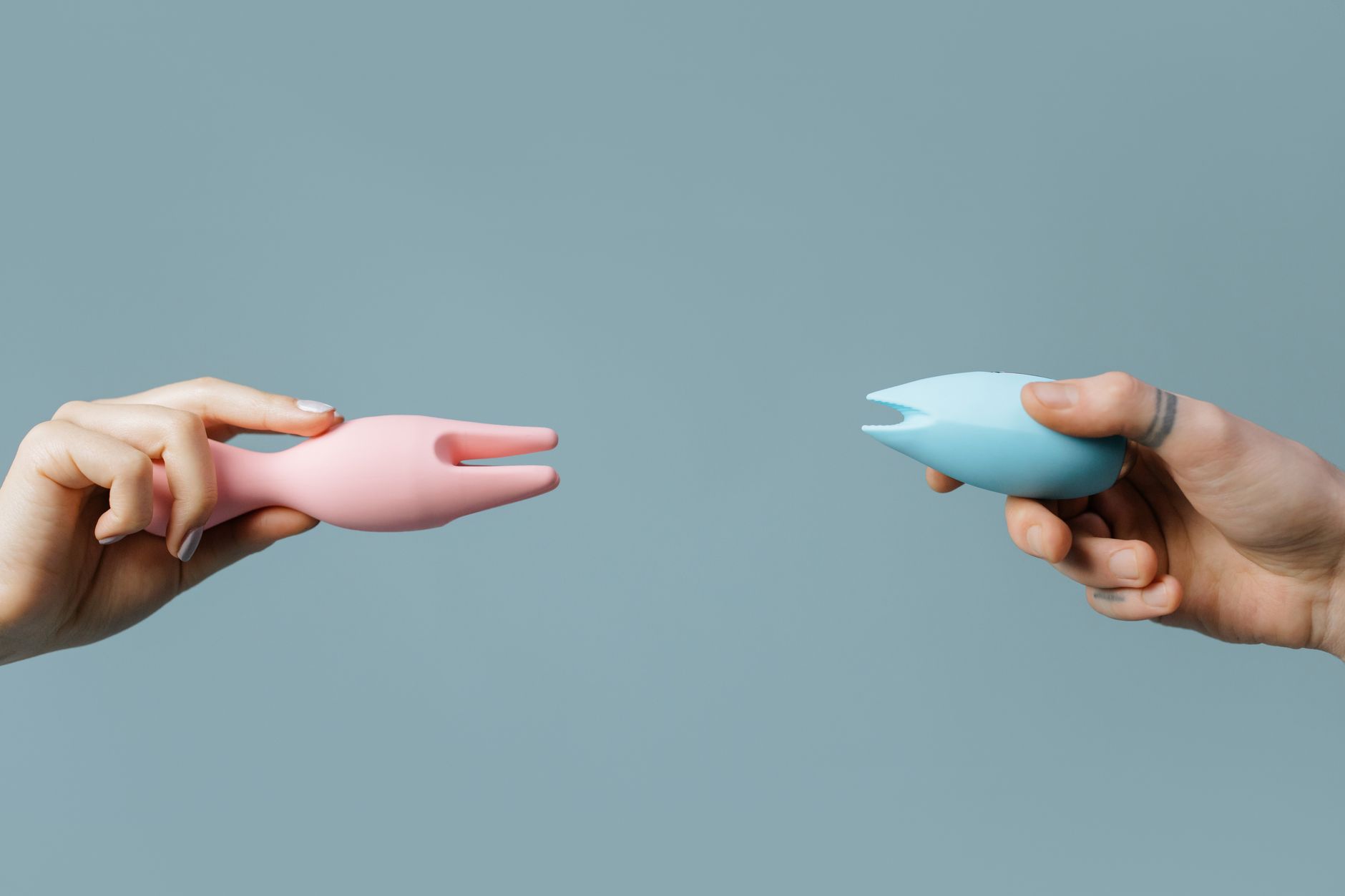
Photo by Anna Shvets on Pexels
How lemon clitoral vibrators build genuine arousal, not just mechanical response
There's a difference between what your body does and what you actually feel. You can have an orgasm while mentally somewhere else entirely. But genuine arousal, the kind that includes actual desire, requires your nervous system to feel safe. When you're anxious about a new partner, that safety is conditional and fragile.
Using a lemon vibrator solo first, before introducing it with a partner, gives your nervous system a chance to learn that this tool feels good in a low-stakes environment. You're not worried about someone else's reaction. You're not checking in with yourself about whether things are "working." You're just feeling what you feel.
Then, when you add your partner into the equation, the vibrator isn't new and scary. It's familiar. Which means you can focus on your partner's presence and touch instead of being anxious about whether a piece of silicone is going to feel awkward.
This is especially true if you've been through a period of not having sex, or if your last relationship involved pressure or performance anxiety. Your body learns what safety feels like by practicing it alone first. That practice translates directly into how present you can be with someone new.
Specific strategies for rebuilding confidence
One thing I recommend to clients rebuilding desire with a new partner: use a lemon clitoral vibrator during solo sessions specifically to remind yourself what arousal feels like when there's zero pressure. Not for the orgasm, necessarily, but to reactivate the pathway between your clitoris and your brain.
When you've spent months or years anxious about sex, those neural pathways get quiet. Pleasure becomes something that happens to you rather than something you generate. A lemon vibrator, used intentionally, wakes those pathways back up. It's like physical therapy for your arousal system.
Second, when you do use it with a partner, pay attention to your actual sensations rather than what you think should be happening. Notice the difference between suction and vibration. Notice what pattern and speed actually feel good versus what you think you're supposed to like. This granular attention to your own pleasure is what builds confidence. You're getting data about yourself, not performing data for someone else.
Third, don't ask for feedback during. The temptation with a new partner is to check in constantly: "Does this feel okay? Are you bored? Am I taking too long?" Every check-in is a small brake on arousal. Use the lemon vibrator as your permission to stay internal for a while. Sensations, not spectacle.
The emotional piece nobody mentions
Rebuild desire with a new partner isn't just about physical sensation. Part of why arousal feels stuck is that you're still grieving or processing the last relationship, or you're carrying doubt about whether you're attractive, or you're worried this person will leave like the last one did. A vibrator can't fix those feelings, and I'm not going to tell you it can.
What it can do is give your nervous system evidence that pleasure is still available to you. That your body still works. That you're still capable of desire. Those aren't small things when you're rebuilding. They're foundational.
If you find that you're using a lemon vibrator and arousal still isn't building, or if you feel numb or disconnected even during solo pleasure, that's worth exploring with a therapist or counselor. Sometimes the block isn't physical. But most of the time, when someone's been anxious in relationships, reconnecting with solo pleasure first is the exact permission their body needs.
Common questions about toys and new relationships
Will introducing a vibrator make my partner feel inadequate? Not if you frame it as something for you, not something against them. "I want to use this to help my body show up fully with you" lands very differently than "I need this because you're not enough." The first is true. The second is a lie you might tell yourself. Partners worth keeping actually appreciate the honesty.
How long should I wait to introduce it? After you've been intimate at least a few times and had at least one conversation about what you both enjoy. You want enough comfort that they don't feel ambushed, but not so much time that they've already formed opinions about what your sexuality is.
What if we try it and it doesn't feel good? Then you stop. There's no prize for pushing through discomfort with a new person. The point is to rebuild confidence, not create new anxiety. Try it again later, or don't. Your pleasure, your choice.
Can I use it during partnered sex even if we're not having penetrative sex? Yes. Absolutely. A lemon clitoral vibrator works beautifully during oral sex, during manual stimulation, or just during general touching. It's not a replacement for partnered touch. It's an addition.
FAQ: Rebuilding Desire in Early Relationships
Why does arousal feel slower when you start dating someone new?
Your nervous system is assessing safety. When you've been with someone for years, your body knows they're safe enough to relax. With someone new, that assessment is still ongoing. Slower arousal is your body being cautious, not broken. It usually speeds up as familiarity and trust build.
Can a lemon vibrator actually help rebuild sexual confidence?
Yes, but indirectly. By using one solo first, you remind your body what pleasure feels like without performance pressure. That evidence of your own capacity for arousal translates into more confidence when you're with a partner. You're not hoping arousal will happen. You know it can, because you've felt it.
Is it normal to feel disconnected during partnered sex with someone new?
Completely. You're managing multiple things at once: physical sensation, emotional safety, attraction to this specific person, and your own internal doubts. That's a lot of bandwidth. Using a lemon clitoral vibrator gives you something reliable to focus on while you're still building emotional presence.
What if my new partner doesn't want me to use toys?
That's information. Specifically, it's information that this person has their own anxiety about adequacy or control. That's worth addressing before resentment builds. A partner who loves you wants you to experience pleasure. If they don't, there are deeper conversations to have.
How do I know if I'm using a vibrator to avoid intimacy versus to enhance it?
The distinction is whether you're more present and connected during and after, or whether you're more checked out. If using a lemon vibrator helps you relax enough to actually feel your partner's touch and be with them, it's enhancing. If you're using it to avoid eye contact or emotional presence, that's worth noticing.
Should I tell a new partner about my sexual history or past relationship trauma?
Eventually, yes. Not on date one. But before you become regularly intimate, your partner deserves to know if there are things that might affect how your body responds. You don't owe them graphic details, but honesty about past anxiety or trauma lets them understand what they're working with. That context actually deepens intimacy.
The real work starts with you
Rebuild desire with a new partner is possible, and it's not about forcing yourself to feel something you don't. It's about creating conditions where genuine arousal can emerge. A lemon clitoral vibrator is one tool that helps. Solo exploration is another. But the foundation is permission. Permission to move at your own pace, to ask for what you need, to be honest about what's working and what isn't.
If you're starting over sexually with someone new, and arousal feels stuck or slow, that's not a reflection on you or on them. That's your nervous system being exactly as cautious as it needs to be. The path forward is reconnection with your own pleasure first, then gradual integration of a new partner into that. Tools like lemon vibrators make that reconnection faster and less lonely.
Want to talk through your specific situation? Reach out. I'm here to help you rebuild not just arousal, but genuine sexual confidence with your new partner. Get in touch.