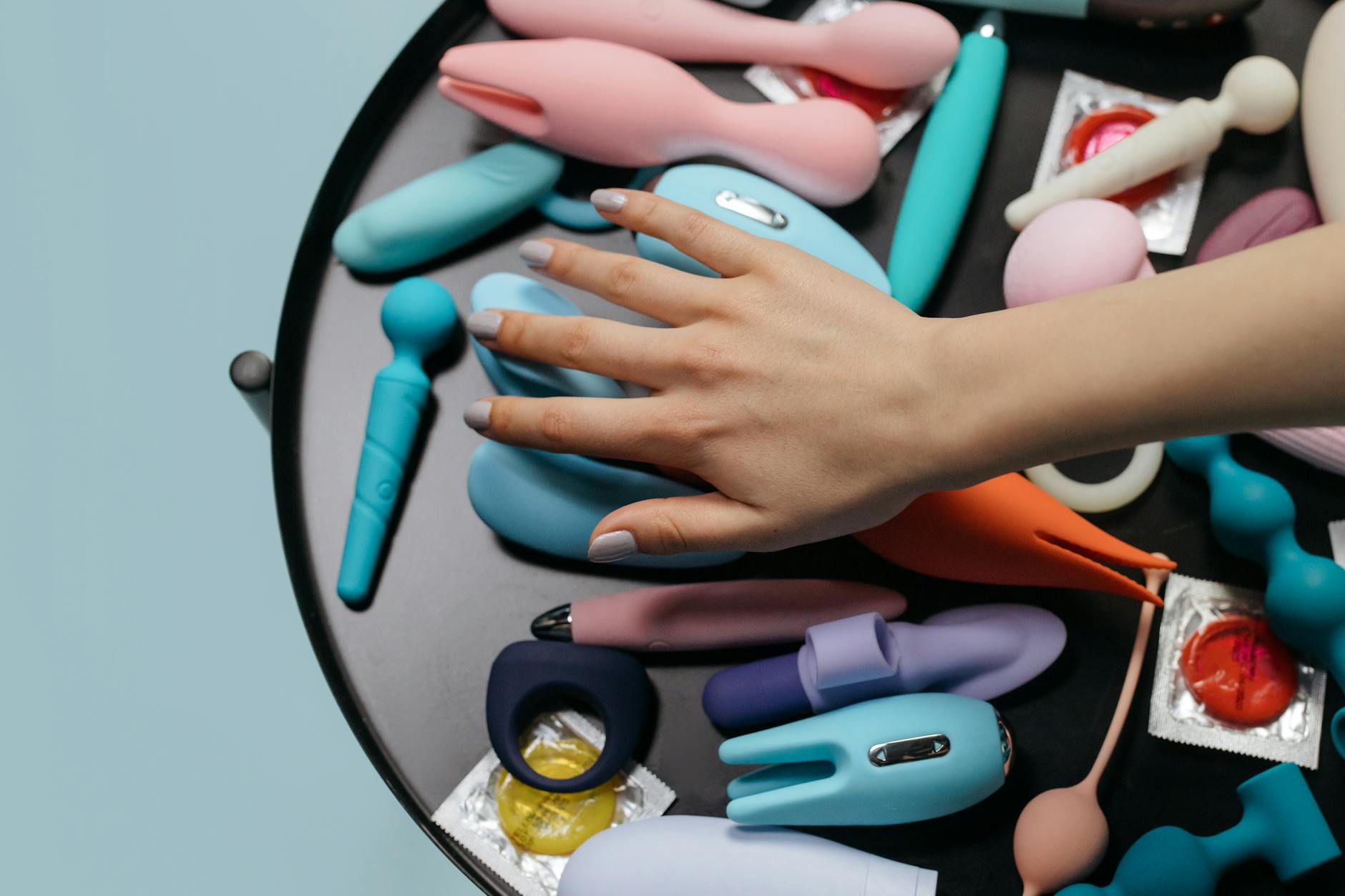
Let's talk about that floating feeling
You're in bed with your partner. Everything looks right on the surface. But somewhere between their touch and your body, the connection drops. You're there but also not there. Your mind wanders. Your body feels like it belongs to someone else. And the harder you try to feel something, the further away sensation gets.
This isn't a sign your relationship is broken. It's not because you're not attracted to them. Disconnection during partnered sex is a nervous system response, and it's wildly common.
Why disconnection happens during sex with a partner
There are usually three layers working at once.
First, there's the performance pressure. Even in long-term relationships, a small voice asks: Am I doing this right? Is my partner enjoying this? How long should this take? That internal running commentary keeps you in your head instead of in your body.
Second, there's the vulnerability math. Let yourself feel intensely with someone else requires trust. If there's unresolved conflict, resentment building, or even just emotional distance from a busy week, your nervous system protects you by dampening sensation. It's a safety mechanism.
Third, and this matters most, sensation works better with novelty and intensity. When partnered sex follows the same rhythm, same positions, same pressure every time, your nervous system literally stops paying attention. Your brain is wired to notice what's new and filter out what's predictable.
How lemon vibrators create a circuit breaker
Here's the thing about air-suction toys like the Lem: they introduce an element your partner can't replicate. The suction pattern, the intensity, the rhythm that changes under your control. That newness wakes up your nervous system.
When you bring a lemon clitoral vibrator into partnered sex, you're not replacing your partner's touch. You're adding a stimulus your body recognizes as distinct. That distinction triggers presence. Your brain stops running the performance checklist and actually processes sensation.
My couples often report that adding a lemon vibrator to sex feels like turning up the volume on everything else too. Suddenly they notice their partner's touch again. The kiss becomes clearer. The eye contact lands differently. It's not the toy doing the emotional work. It's your nervous system waking up.
Three ways to introduce the Lem without awkwardness
Start with context, not the toy. Before sex, tell your partner something true: "I've been feeling a bit checked out lately and I want to try something that might help me stay present." That frames it as self-care, not criticism. Most partners appreciate the honesty.
Bring it in during foreplay, not as an emergency fix. Use the lemon vibrator on yourself while your partner watches and touches you elsewhere. Let them see you respond to it. This creates anticipation and makes it feel collaborative instead of like an intervention.
Hand over a little control. Some couples love when the partner holds the toy. Others prefer to keep that control. Both work. The key is agreeing beforehand so there's no awkward pause mid-sex where someone's wondering if they should touch it.
The patterns that actually work
Disconnection during partnered sex usually means you need more external sensation to keep your nervous system engaged. That's not weakness. That's just biology.
Start with pattern 1 or 2 on the Lem at the beginning of foreplay. Let your body warm up. Then increase intensity gradually as arousal builds. The goal isn't orgasm on the vibrator and then partnered sex. The goal is maintaining arousal and presence throughout the entire experience.
Many couples find that using the Lem during penetration keeps clitoral sensation engaged, which prevents that dissociated feeling mid-sex. Your attention stays in your body instead of drifting.
If you're someone who needs a lot of direct stimulation to orgasm, using the Lem during partnered sex isn't cheating. It's the difference between an orgasm that happens and one you actually feel. The presence matters more than the method.
When disconnection is really about the relationship
Here's the honest part. Sometimes a lemon vibrator helps you reconnect. Sometimes it helps you see clearly that you need to reconnect differently, through conversation or couples therapy or taking a week to actually talk to your partner instead of performing intimacy.
If disconnection is happening consistently across all partnered sexual situations, the vibrator is a tool, not a solution. It might help you stay present enough to enjoy sex while you work on the underlying distance. But it won't fix unresolved conflict or emotional disconnection that lives outside the bedroom.
That's actually when a good couples therapist becomes as useful as a good vibrator. Different tools, same goal. And they work better together.
Building presence back into sex
Disconnection often means your nervous system has learned that partnered sex isn't safe enough for full engagement. Adding the Lem creates a sense of agency. You control the sensation. That reclaims your sense of power in the experience.
Over time, as your nervous system relaxes and relearns that presence is safe, some couples find they need the vibrator less often. Others find they love it permanently. Both are fine. The goal isn't to white-knuckle your way back to some imaginary "natural" way of having sex. The goal is pleasure and connection, however you get there.
Start small, check in with your partner, and notice what shifts. Sometimes just naming the disconnection and inviting novelty into your sex life changes everything.
Frequently asked questions
Can my partner feel jealous if I use a vibrator during sex with them?
Jealousy sometimes surfaces, but usually it's not about the toy. It's about feeling replaced or inadequate. The antidote is conversation before, during, and after. Tell your partner what you're feeling, ask what they're feeling, and frame it as "this helps me stay connected to you," which is usually true. If jealousy persists, that's worth exploring in couples therapy, because it usually points to deeper insecurity that a vibrator won't fix.
Should I orgasm from the vibrator or from my partner during partnered sex?
You should orgasm however feels good. Some people need the vibrator for arousal and then orgasm from partnered touch. Others need it all the way through. There's no hierarchy here. The goal is your pleasure and presence, not a specific sequence of events.
What if my partner wants to use the vibrator on me but it doesn't feel the same as when I hold it?
Control matters for presence. If you need to hold the vibrator to stay present, that's real feedback. Your partner holding it can feel like performance pressure instead of pleasure. Some couples solve this by having the receiving partner guide their partner's hand while holding the vibrator. Others alternate. Find what keeps you present.
How do I know if disconnection during sex is about the relationship or just my nervous system?
Notice the pattern. If disconnection happens with this partner specifically, it might be relational. If you feel disconnected during all partnered sex but present during solo sex, it's usually a nervous system response to vulnerability. Both are fixable. The first through couples work, the second through slowly rebuilding trust in your own body and in being seen.
Can lemon vibrators help if I feel shame about needing them during partnered sex?
Absolutely. In fact, shame thrives in silence. Using a lemon clitoral vibrator and being open about why you use it often dissolves the shame. Your partner usually appreciates the honesty. And when shame lifts, presence becomes easier.
What if my partner refuses to engage with toys during sex?
That's a conversation worth having. "I'd like to try this because it helps me feel more present" is different than "I'm not satisfied with what you're doing." If your partner still refuses, you have options: you can use the vibrator before or after partnered sex to stay sexually engaged, you can use it solo, or you can have a bigger conversation about why toys feel threatening to them. Sometimes that conversation opens something. Sometimes it clarifies incompatibility. Either way, you get useful information.
Feeling disconnected during partnered sex doesn't mean you're broken. It means your nervous system is asking for something different. A lemon vibrator, honesty with your partner, and patience with yourself often bring you back. And sometimes back feels better than before.