Let's name the resistance
Your partner doesn't want toys. Not because they're prudish or afraid, and probably not because they're judgmental about you. Usually it's because they feel like a toy means they're failing at something. That they're not enough, not good enough, not skilled enough. When you suggest a lemon vibrator, what they hear is criticism, not invitation.
Here's the thing: that's not actually about toys. It's about security. And that's where we start.
Why partners resist, and it's rarely about the toy itself
Three core fears show up over and over in my practice:
First, there's performance anxiety. Your partner ties their self-worth to your pleasure. If a toy gets you off and they don't, they feel replaced. This isn't rational, but it's real, and dismissing it creates a standoff.
Second is shame or discomfort with their own sexuality. Some people grew up in environments where sex was transactional, mechanical, something to power through. Toys feel too playful, too indulgent, too tied to pleasure as its own goal. Introducing one triggers old stories about what sex is supposed to be.
Third is plain unfamiliarity. Your partner has never used toys, has never seen them in context, might have weird ideas about what they're for. A lemon clitoral vibrator shows up as weird and foreign instead of intuitive.
None of these are actually about you or your desire. The conversation needs to stay there.
Start with the conversation, not the toy
Timing matters wildly. Do not introduce this during sex, during a fight, or when you're already frustrated. Pick a neutral moment. Maybe a walk, maybe sitting down with tea, somewhere you're both calm and you won't be interrupted.
Here's the framework I recommend:
"I want to talk about something that might sound weird, so give me a second." Start with permission and honesty. You're not sneaking this in.
"I'm interested in trying something because it feels good to me, not because anything's missing." Separate your pleasure from their performance. Those are different things.
"I'm telling you about this because I trust you and I want us to explore it together, not because I've already decided." Make them a collaborator, not a witness to your unilateral choice.
"I'm nervous about how you'll react, so I want to hear what you think." Vulnerability works. Defensiveness doesn't.
Then actually listen. If they say no, hear why. If they say maybe, sit with that. If they say yes but seem uncertain, believe the uncertainty.
The reframe that actually shifts things
Here's what I've watched work: stop framing a lemon clitoral vibrator as a sex toy. Frame it as a body tool. A lemon sucker isn't a replacement for your partner's touch. It's a different kind of sensation entirely.
Compare it to something neutral: a shower massager for your back works differently than your partner's hands. It doesn't mean your partner's touch is bad. It means your body has different nerve endings in different places, and different inputs feel different. That's biology, not rejection.
When you talk about using a lemon vibrator, you're not saying "I want this instead of you." You're saying "I want this in addition, and I want you there with me."
How to introduce it in practice
If your partner agrees to try, don't just pull out the toy. Do this instead:
Week one: normalize it outside the bedroom. Leave a lemon vibrator on the nightstand. Let them see it. Let them pick it up, ask questions, lose the mystery.
Week two: use it alone, and tell them. "I used the lemon vibrator while you were out and I felt amazing. I want to show you what that feels like if you're curious." Casual, matter-of-fact, not apologetic.
Week three: invite them to watch. "I'd love for you to be in the room while I use it." This is actually huge for partners who feel threatened. Watching your pleasure builds connection instead of triggering competition.
Week four: ask them to hold it. "Would you be willing to use the lemon vibrator on me?" Now they're giving you pleasure with a tool. That's different from being replaced by one.
Week five and beyond: play together. Use the vibrator while they're touching you differently. Have them control the intensity while you guide them. Make it collaborative.
Each step is optional. Your partner can opt out at any point. The goal isn't to force acceptance. It's to build familiarity so the toy stops feeling like a threat and starts feeling like another part of your shared experience.
Managing the emotions that come up
Even with the best conversation, feelings will probably show up.
If your partner gets quiet or withdrawn, name it. "I notice you seem uncomfortable. That's okay. Do you want to talk about what came up?" Don't push through discomfort. Let it be heard.
If they make a joke that lands funny, take it seriously. "When you said that, I felt a little sad. I don't think this is actually funny to me." Your feelings matter too.
If you feel frustrated that they're resistant, that's valid. You don't have to perform happiness about their hesitation. You can want this and also respect their pace.

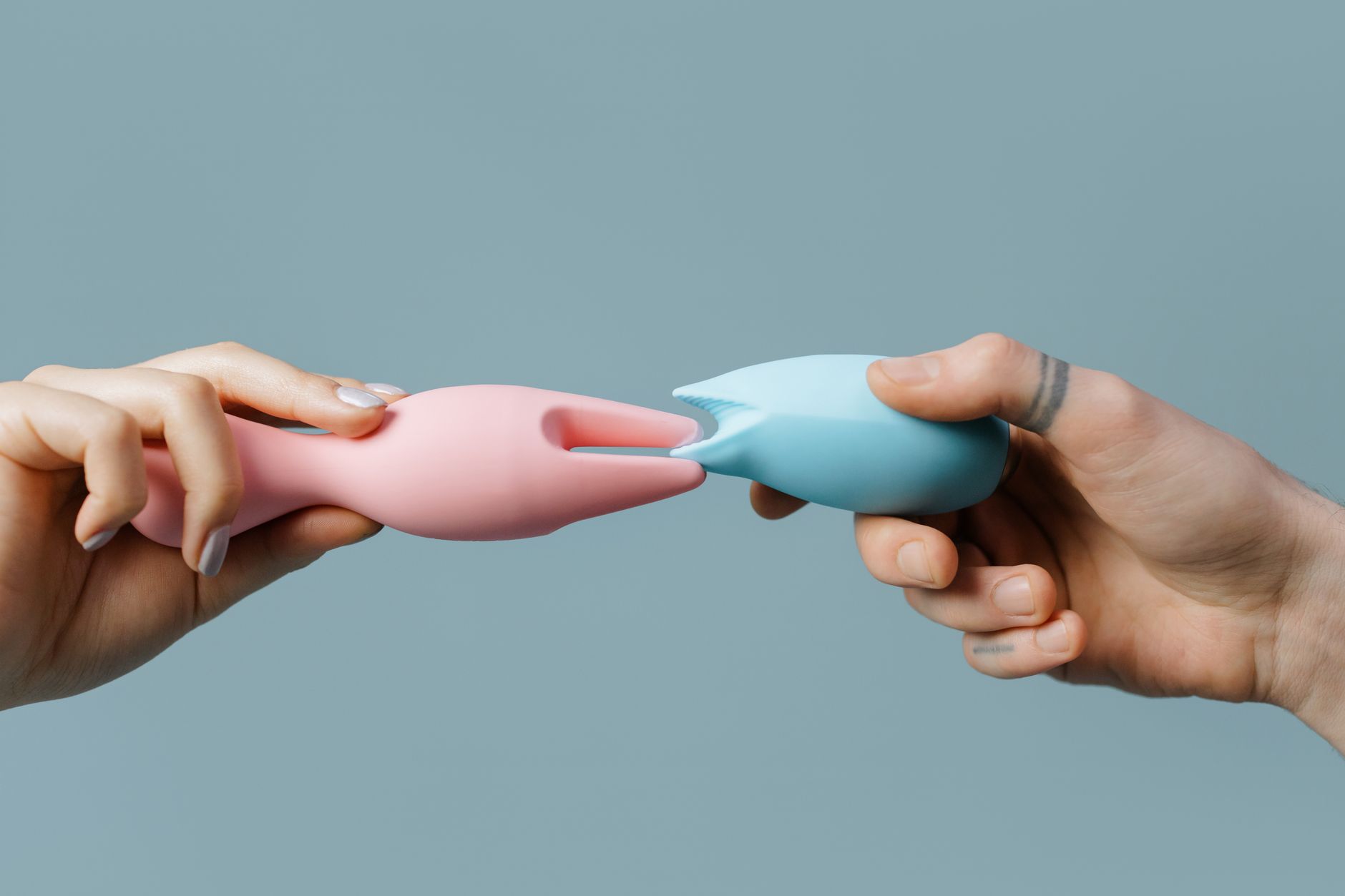
Photo by Anna Shvets on Pexels
The sex that happens after
Once you're using a lemon vibrator together, a few things usually shift:
Your partner realizes that pleasure isn't a competition. You can orgasm from a vibrator and still want them. Pleasure stacks. It doesn't divide.
You get more aroused, more relaxed, more present. That's actually easier for your partner to be with than frustration or numbness.
You learn what feels good to your body at your own pace, not rushed by someone else's timeline. That knowledge makes you a better collaborator in bed.
Many couples find that introducing a lemon clitoral vibrator together actually strengthens connection because they had to talk about sex directly. That's rare. Most long-term partners don't.
When resistance stays resistance
Sometimes you have this conversation, you move slowly, you do everything right, and your partner still says no. Not maybe. No.
That's real information. And you get to decide what it means for you.
If a lemon vibrator is important to your pleasure and your partner refuses, that's a compatibility question, not a broken toy question. You might need a couples therapist to untangle whether this is about the toy or about deeper dynamics around desire, control, or intimacy.
You're allowed to want something your partner doesn't want to give. And they're allowed to have boundaries. The hard part is deciding if those two things can coexist.
But most of the time? When the conversation is real and the pacing is slow and you're genuinely collaborative, partners come around. Not because they suddenly love toys, but because they love you more than they love their fear.
People also ask
Why do partners feel threatened by clitoral vibrators?
Most partners tie their self-worth to being able to give you pleasure. A vibrator feels like proof that they can't, which triggers shame and inadequacy. The vibrator isn't the threat. The fear of not being enough is.
Can I use a lemon vibrator with my partner if they're not ready?
Yes, but context matters. Using it alone and telling them after is different from secretly using it. Honesty is the minimum. Actively involving them is the goal, but you don't need permission to own your own pleasure. You do need transparency.
How long does it usually take for a partner to accept toys?
It depends entirely on the person. Some partners warm up in weeks. Others take months. Some never fully embrace it but accept that it's part of your sexuality. Pushing for faster acceptance usually backfires. Slow is the speed.
What if my partner agrees to try but seems uncomfortable during sex?
Stop and talk. "I'm noticing you seem tense. Do you want to keep going or take a break?" His comfort matters as much as yours. If this is going to work, both of you need to feel okay. Pushing through discomfort builds resentment, not connection.
Is it weird if my partner wants to use the lemon vibrator on themselves?
Not weird at all. Some partners actually find using a lemon clitoral vibrator on their partner easier than receiving the suggestion. They get to give you pleasure without it feeling like they're being replaced. That's a totally valid entry point.
How do I bring this up if we've never talked about toys before?
Start with desire, not toys. "I've been curious about my body lately and I want to explore what feels good to me. I'm interested in trying something and I'd love to have you be part of it." That frames it as self-exploration you're inviting them into, not a criticism of what you already have.
The real shift
Introducing a lemon vibrator to a resistant partner isn't about convincing them that toys are great. It's about building enough trust and communication that you can both be honest about what you want. Some couples never use toys together. That's fine. But the couples who talk directly about sex, who negotiate desire, who stay curious about each other? Those are the ones who stay connected over time.
A lemon sucker is just a tool. The conversation is the real thing. Start there, move slowly, and let your partner's trust develop at their pace. Most of the time, that's all it takes.
If you're ready to explore and want guidance on how these work or what might fit your body, reach out. We're here to help.
Sources
Gottman, J. M., & Silver, N. (2015). The Seven Principles for Making Marriage Work. Harmony.
Perel, E. (2018). Mating in Captivity: Unlocking Erotic Intelligence. Harper Perennial.
Metz, M. E., & McCarthy, B. J. (2007). The "All or Nothing" Approach to Male Sexual Dysfunction: A Barrier to Effective Treatment and Relationship Satisfaction. Journal of Sexual Medicine, 4(3), 550-553.