Here's the thing about desire mismatch
Desire discrepancy is the third most common complaint I hear in my therapy room, right after communication and money. One partner wants sex twice a week. The other wants it twice a month. Neither person is wrong. Both are frustrated. And almost always, the lower-desire partner feels pressured, while the higher-desire partner feels rejected.
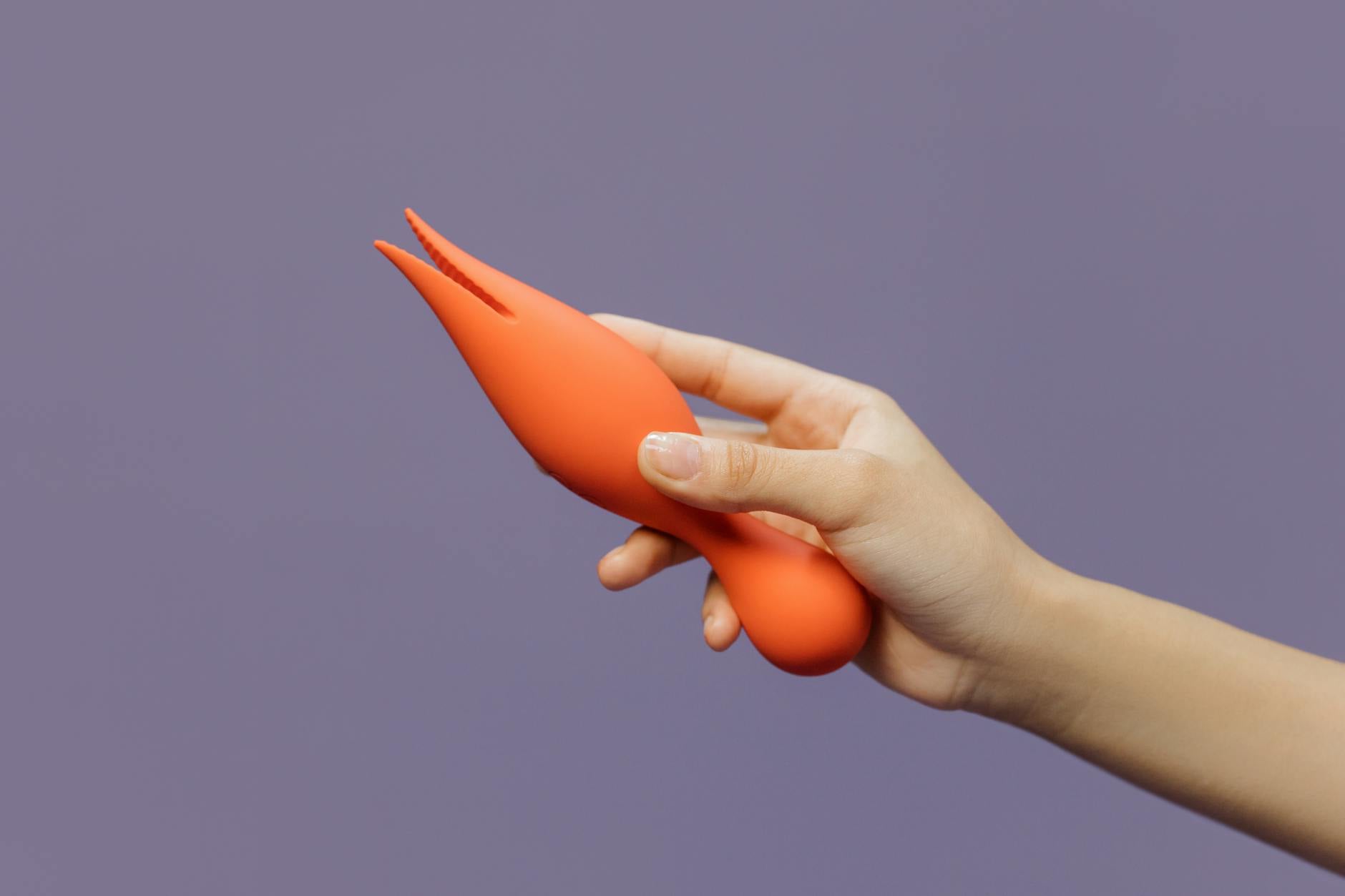
Lemon vibrators, and specifically the clitoral suction design, can interrupt that cycle entirely. Not by forcing desire into being, but by removing the performance element that makes lower-desire partners tense up in the first place.
Why desire drops when there's mismatch in the room
When someone feels sexually pursued without reciprocal enthusiasm, their nervous system does exactly what it's supposed to do. It tightens. The pelvic floor contracts. Arousal becomes harder to access. You end up with a feedback loop: higher-desire partner initiates more, lower-desire partner shuts down faster, both feel increasingly resentful.
This isn't about attraction or love. It's about safety. The lower-desire partner's body is registering, "I'm being asked for something I can't give right now," and the nervous system responds by making that thing even harder to access.
A lemon clitoral vibrator shifts this because it moves the focus entirely away from partnered sex. Suddenly it's not about performance, penetration, or timing. It's about sensation. And sensation, weirdly, is often easier to access when you're not being watched.
The surprising part: separate pleasure can rebuild togetherness
Most couples assume that if one person uses a vibrator, it means the other partner has failed. The opposite is true in my clinical experience. When a lower-desire partner gets to explore their own pleasure on their own timeline, using a device like the Lem, two things happen. First, they rediscover that pleasure exists without external pressure. Second, they often become more interested in partnered sex because it's no longer tangled up with obligation.
The key is framing it correctly. You're not solving a problem. You're expanding the menu.
How to introduce a lemon clitoral vibrator into the conversation
Don't spring it on your partner during sex. Don't leave it on the nightstand as a hint. That's asking for resentment, not pleasure.
Instead, start outside the bedroom. Over coffee or a walk, say something like: "I've been thinking about our sex life, and I don't think either of us is getting what we need. I'm wondering if we could try something that takes pressure off both of us." Then explain that you'd like to explore solo pleasure for a bit, with a device designed to make that easier. You can mention that clitoral vibrators like the Lem work through suction rather than vibration, which feels gentler and less clinical.
If your partner is the lower-desire one, frame it differently. Something like: "I know you haven't been feeling interested lately, and I've been pushing. I don't want to do that anymore. I found something that might help me feel better on my own, so you don't have to worry about satisfying me." That removes the obligation and often paradoxically makes them more open to sexual connection.
The actual mechanics of using lemon vibrators when desire is mismatched
Set a regular time when your partner knows you'll be using your lemon vibrator alone. Not secretly. Just matter-of-factly. The lower-desire partner needs to know this isn't something they're missing out on or failing to provide.
Start with a pattern on the Lem between 1 and 3. Give yourself at least 15 minutes. The goal isn't to rush to orgasm. The goal is to remember what pleasure feels like when there's zero pressure.
If your partner is curious, they can watch. If they want to touch you, that's fine too. But don't make it a requirement. The magic here is in the permission to want something and pursue it without negotiating it in real time.
For the lower-desire partner, the invitation might look different. "Would you ever want to explore what feels good to you, without me asking for anything in return?" A lemon clitoral vibrator gives them a no-judgment way to do that. No performance required. No timeline. Just sensation.
When separate pleasure starts shifting desire levels
Here's what I've watched happen with couples who try this approach. After a few weeks, the higher-desire partner stops feeling rejected because they have an outlet that isn't dependent on their partner. They also stop pursuing as aggressively, which paradoxically makes the lower-desire partner less defensive.
The lower-desire partner, meanwhile, is experiencing pleasure without pressure. Their nervous system starts to relax around sex again. They might start thinking about it more. They might initiate. Or they might stay at their current frequency, but stop it feeling like failure.
Both outcomes are fine. The point isn't to make your desire levels identical. That's not possible and frankly not necessary. The point is to stop having the same conversation where someone feels guilty and someone feels rejected.
The conversation that actually matters
Using a lemon vibrator isn't the fix. It's the context shift. The real work happens when you sit down and say: "We have different desires. That's normal. But I don't want either of us to feel rejected or obligated. Let's figure out what works for both of us."
Then you might decide that you have sex twice a week when you both want to, and the higher-desire partner explores solo pleasure on the other days. Or you might find that once the pressure lifts, desire synchronizes more naturally. Or you might stay exactly as you are, but stop it being a problem.
The Lem, or any quality lemon clitoral vibrator, is the tool that makes that possible. Because it says: your pleasure matters, and it doesn't have to cost your partner anything.
When to involve a professional
If desire mismatch is wrapped up in other resentment, communication problems, or infidelity concerns, a vibrator won't fix it. Neither will I. You might need a couples therapist who can help you untangle what's really driving the mismatch.
But if you're dealing with a straightforward case of different drives in an otherwise solid relationship, a lemon clitoral vibrator and an honest conversation can genuinely change the dynamic. I've watched it happen. The relief on both faces when someone finally says, "We don't have to solve this together," is remarkable.
FAQ
Will using a lemon vibrator make my partner feel replaced?
Not if you frame it correctly. The conversation should be, "I'm taking care of my own pleasure so I stop asking so much of you," not "I prefer this to being with you." Most partners actually feel relief when the pressure lifts. You're not rejecting them. You're releasing them from an impossible job.
Can we use a lemon clitoral vibrator together if we have different desire levels?
Absolutely. You might use it on your partner during foreplay, or they might watch you use it. The device works great as a couples tool once the pressure dynamic is off the table. The key is that it started as solo exploration, so the expectation isn't attached.
How often should I use a lemon vibrator if my partner has low desire?
There's no rule. Some people use it a few times a week. Some use it daily. The point is to do it openly and consistently enough that it becomes normal, not something you're hiding or that your partner interprets as them failing.
What if my partner feels threatened by a vibrator?
That's usually about insecurity, not the vibrator. A good conversation might sound like: "This isn't about you. My body needs something different right now, and this lets me get that without pressuring you." If they remain threatened, that's worth exploring in couples therapy, because the issue isn't really the vibrator.
Can a lemon sucker vibrator actually help with libido issues?
It can help by removing pressure and shame around pleasure. It can also help by reintroducing sensation in a low-stakes way. But if libido is dropping due to depression, hormones, or medication, you might need medical support alongside the vibrator, not instead of it.
Does using a clitoral vibrator mean my partner and I are sexually incompatible?
No. Sexual compatibility is about willingness to work with difference, not about having identical desire. Plenty of couples with different drives have rich, connected sex lives because they stopped trying to force sameness and started working with reality instead.