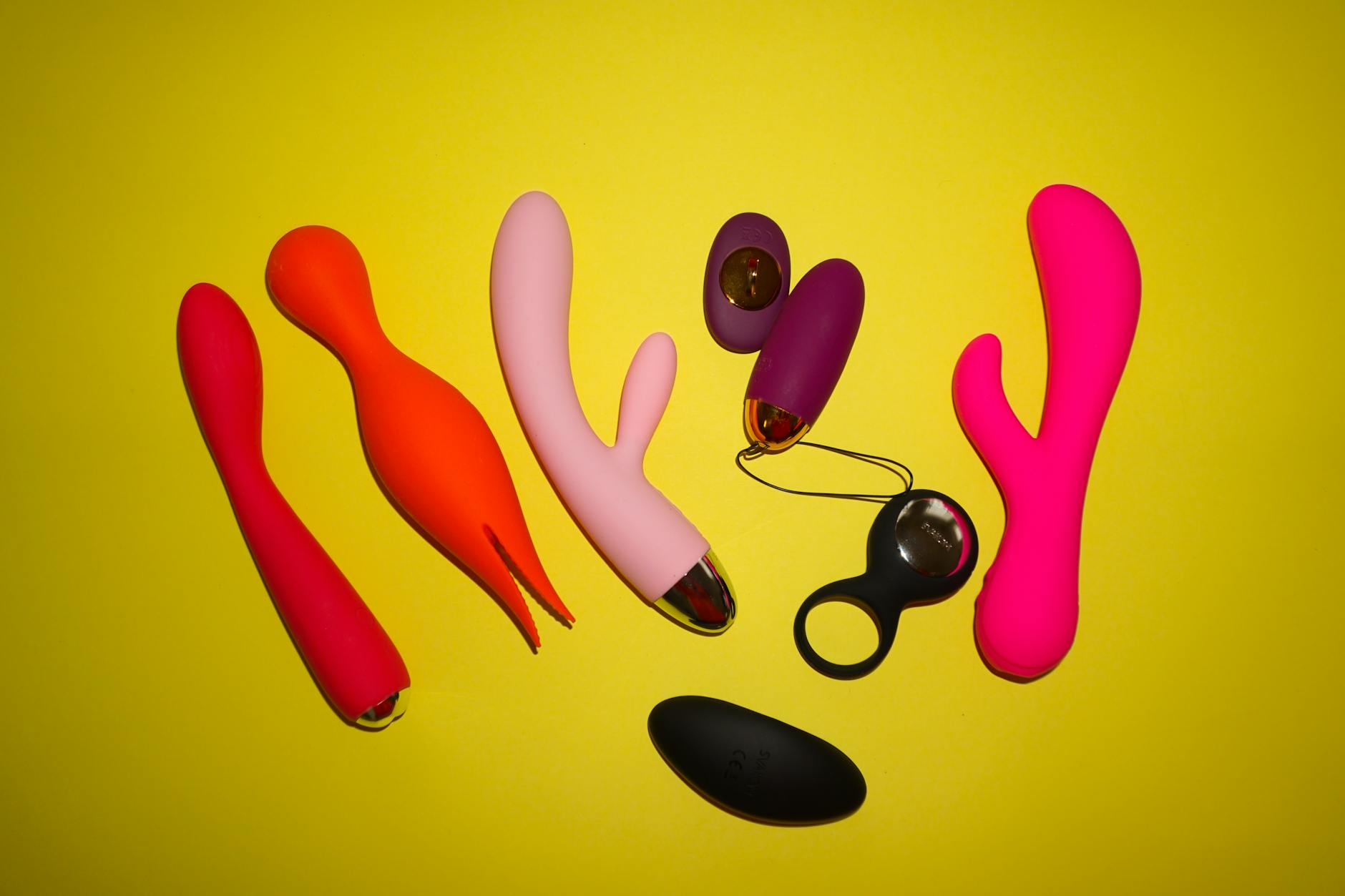
Let's talk about what actually happens to your body at 40
Something shifts. Not dramatically. Not all at once. But somewhere between 35 and 45, you might notice that the same touch that used to make you gasp feels different now. Maybe less electric. Maybe requiring more time to build. Maybe it takes a different kind of pressure altogether.
Here's what I hear from clients in their 40s: "Am I broken?" The answer is no. Your body is reorganizing.
The science of sensitivity in your 40s
Collagen production drops. Skin texture changes throughout the body, including the vulva. Blood flow patterns shift. Nerve endings don't disappear, but the tissues around them transform, which changes how quickly signals travel and how intensely you feel them.
At the same time, testosterone (which everyone with a vulva produces, though often in smaller amounts than people with penises) starts its natural decline. Testosterone is a major player in clitoral sensitivity and desire. When it drops, your nervous system requires slightly different stimulation to hit the same threshold of arousal.
This is not a bug. It's a recalibration.
Why traditional vibration stops working the same way
Most standard vibrators use rapid back-and-forth movement. This works brilliantly in your 20s and 30s when tissue is thicker and nerve sensitivity is at peak baseline. But in your 40s, that constant friction can start to feel either too intense or weirdly numb, depending on the day and your cycle.
That's where suction-based lemon vibrators change the game. Instead of friction, they use gentle negative pressure and pulsation. This stimulates nerves without requiring the same mechanical wear on tissue. The Lem and similar clitoral vibrators that use suction technology work with your body's actual responsiveness right now, not against it.
How lemon vibrators feel different at 40
Three key differences:
1. Deeper sensation without rawness. Suction creates a broader field of stimulation. You feel it across the entire clitoral complex, not just the tip. For people in their 40s, this often translates to more intense and longer-lasting sensation with less tissue irritation.
2. Longer, more controllable build-up. You're not fighting your body's natural arousal timeline anymore. With a lemon clitoral vibrator, you can spend 20-30 minutes at low intensities and actually enjoy it, rather than feeling like you're spinning your wheels. The sensation builds steadily instead of spiking and plateauing.
3. Orgasms that feel different, often better. Clients report that orgasms with suction technology feel more full-body at 40-plus, less localized. Some describe them as deeper. Some say they last longer. Different isn't worse. Different is information about what your body actually wants right now.
The practical setup that matters most
If you're new to lemon vibrators or you've been using traditional vibration for years, these adjustments will help:
Start with pattern one. Not because you're sensitive, but because you want to learn the device. Suction technology has a learning curve. Your body needs to understand what it's feeling. Spend a full session (or five) at the gentlest setting. You'll know when you're ready to move up.
Add lubrication. Water-based lubricant isn't a sign of dysfunction. It's a tool. At 40, tissues benefit from lubrication. It creates a better seal for suction and lets you session longer without discomfort. Aloe-based or hyaluronic acid lubes work particularly well because they're thicker and last longer than standard water-based options.
Time your sessions around your cycle if you menstruate. In the follicular phase (day 1-14 roughly), your body's baseline arousal is higher. Clitoral sensitivity peaks around ovulation. Post-ovulation, sensitivity dips. If you menstruate, knowing this means you can adjust your expectations and your lemon vibrator settings session-to-session instead of wondering why Tuesday felt different from Thursday.
Budget 20-30 minutes minimum. Your 20-year-old self could get off in five minutes with the right friction. Your 40-year-old self deserves 25 minutes of building pleasure. That's not a longer session. That's a better one.
The mental piece (which is actually half the equation)
Sensitivity in your 40s isn't just physical. It's psychological too.
By now, you've had years of sex. You know your body. You also know, deeply, what society told you about aging and desirability. None of that helps. What helps is deciding that responsiveness at 40 is legitimate and interesting, not a failure of your younger body.
I've seen clients in their 40s and 50s have breakthroughs with lemon adult toys that they never had in their 20s. Not because their bodies suddenly became more responsive, but because they stopped apologizing for how their bodies respond now. They stopped comparing orgasm quality to a memory. They started paying attention to what they actually feel.
If you're partnered, separating this conversation helps: "My body responds differently now, and I'm learning what that means" is different from "Something's wrong." One opens exploration. The other closes it.
When external factors are also at play
Sensitivity shifts in your 40s happen alongside a lot of other life stuff. Stress, changing medications, shifts in relationship dynamics, grief, the cumulative weight of decisions you've made. All of that affects arousal and sensation more than most people admit.
If you're on antidepressants, they may lower baseline sensitivity. If you've been through a stressful work period, your nervous system might need longer to downshift into arousal. If your relationship has changed, your body might genuinely need different kinds of touch to feel connected.
A lemon vibrator is a tool. A powerful one. But it's not magic. If sensitivity is completely gone and nothing is working, check in with a gynecologist, particularly if you're approaching or in perimenopause. Genitourinary syndrome of menopause (GSM) is real and very treatable. If emotional connection is frayed, that's a different conversation worth having.
How to choose your lemon vibrator at 40
Not all clitoral vibrators are equal, and at 40, the details matter more.
Look for a device that lets you start at lower intensities. You want at least five pattern options. Silicone is better than hard plastic because it warms to your body temperature, which feels more responsive. Size matters: smaller and more compact (like a lemon vibrator design) lets you target the exact spot that needs attention right now, rather than covering a broad area.
The Lem by Hello Nancy is built for this. It's designed specifically around suction and pulsation rather than friction. It has seven patterns, which means you're never fighting the device's settings. It's small enough to position exactly where you need it and quiet enough that you're not managing someone else's reaction to the sound.
The rhythm of pleasure at 40
Your 40s aren't the death of sexual pleasure. They're the middle chapter. You know your own body better. You have better boundaries. You're less likely to skip something you actually want because you think you should want something else.
Lemon vibrators and clitoral suction technology work brilliantly in this chapter because they honor how your body actually responds now, not how it responded 15 years ago. That's not settling. That's getting smarter about pleasure.
FAQ: Your questions about clitoral sensitivity and lemon vibrators at 40
Why does clitoral sensitivity change in your 40s?
Collagen production drops, tissue texture shifts, and hormone levels (particularly testosterone) naturally decline. These changes are normal. Your nervous system still works perfectly. It's just communicating with tissue that's transformed. This is the same reason skin changes everywhere on your body at 40. It's not malfunction. It's aging, which is a process, not a problem.
Can you get back to the sensitivity you had in your 20s?
No, and that's actually the good news. Your nervous system at 40 is wired differently. You process sensation differently. The goal isn't to return to 25. It's to discover what 42 feels like. For most people, that's richer and more nuanced, not diminished. Lemon vibrators help you access that.
How long does it take to adjust to a lemon vibrator if you've been using traditional vibration?
Three to five sessions. Your body needs to learn what suction feels like. The first two sessions might feel underwhelming or strange. By session three or four, most people report that it feels exactly right. Don't judge it harshly in session one.
Is numbness normal when you're 40-plus, or is something wrong?
Both are possible. Normal aging includes some shift in baseline sensation. But complete numbness or complete loss of sensation that appeared suddenly is worth checking with a doctor. If you've been using the same toy at high intensity for years, desensitization is real and fixable. Switch to lower settings or try suction-based technology (like lemon vibrators) for 2-3 weeks. Often sensation returns.
Do you need different lubrication when you're older?
You don't need it, but you might benefit from it. At 40, natural lubrication is often less abundant, and that's normal. Lubrication isn't an emergency. It's a choice that makes sensation better. Water-based or hyaluronic acid lubes work with suction technology better than silicone-based lubes, which can damage silicone toys.
Can lemon vibrators help if your partner can't keep up with your need for stimulation?
Yes, but the real conversation is with your partner, not your toy. If you need 30 minutes of foreplay and they're ready to move to partnered sex in 10, that's a mismatch that a vibrator can bridge but shouldn't replace. Many couples find that incorporating lemon clitoral vibrators into partnered sex actually deepens intimacy because it removes the pressure for one person to do all the work. You're both touching. You're both present. It's collaborative.
What if nothing feels sensitive anymore, even with lemon vibrators?
Check in with your doctor first. But also consider that this might be about stress, medication, relationship dynamics, or deep exhaustion rather than your physical capacity. Sometimes "nothing feels good" is your nervous system saying "I need rest, not stimulation." Give yourself permission to pause. Sensitivity often returns when you're actually rested and connected again.
The bottom line
Your 40s aren't a deadline for pleasure. They're a shift. Lemon vibrators and suction-based clitoral technology work brilliantly for this shift because they match how your body actually responds now. Better lubrication, longer warm-up time, lower starting intensities, and permission to explore a different kind of sensation. That's not working around your body. That's working with it. Your pleasure matters at 40, just like it mattered at 25. It just looks different now. And different, in this case, is often better.
If you're curious about how lemon vibrators might work for your body or you want to explore this further with a professional, reach out to our team at Hello Nancy. We're here to answer questions about clitoral vibrators and help you figure out what feels right for you.