Here's the frustration nobody warns you about
You start an SSRI. Your mood lifts. The anxiety quiets down. Then about three weeks in, you notice something else has gone quiet too: you. Arousal takes longer to build, or doesn't build at all. Orgasms that used to arrive reliably now feel distant or muted. And the guilt creeps in because you know the medication is helping your mental health, but your body feels like it's paying the price.
This isn't your imagination, and it's not a personal failure. It's a well-documented side effect of how SSRIs work in your nervous system. The good news: there's a direct physiological workaround, and lemon clitoral vibrators like the Lem are engineered specifically to address it.
Why SSRIs flatten arousal in the first place
SSRIs work by preventing your brain from reabsorbing serotonin, which helps regulate mood. The problem: serotonin also regulates sexual response. High serotonin can suppress dopamine and norepinephrine, the neurotransmitters that drive arousal and the physical cascade of orgasm. Think of it as your brain's dimmer switch getting turned down on purpose for mental health, but your sexual nervous system gets dimmed too.
About 40 percent of people on SSRIs experience some degree of sexual dysfunction. For many, that means delayed orgasm or reduced sensation. For others, it's the initial arousal that never kicks in. The medication isn't broken, and neither are you. The system is just operating under different neurochemical rules.
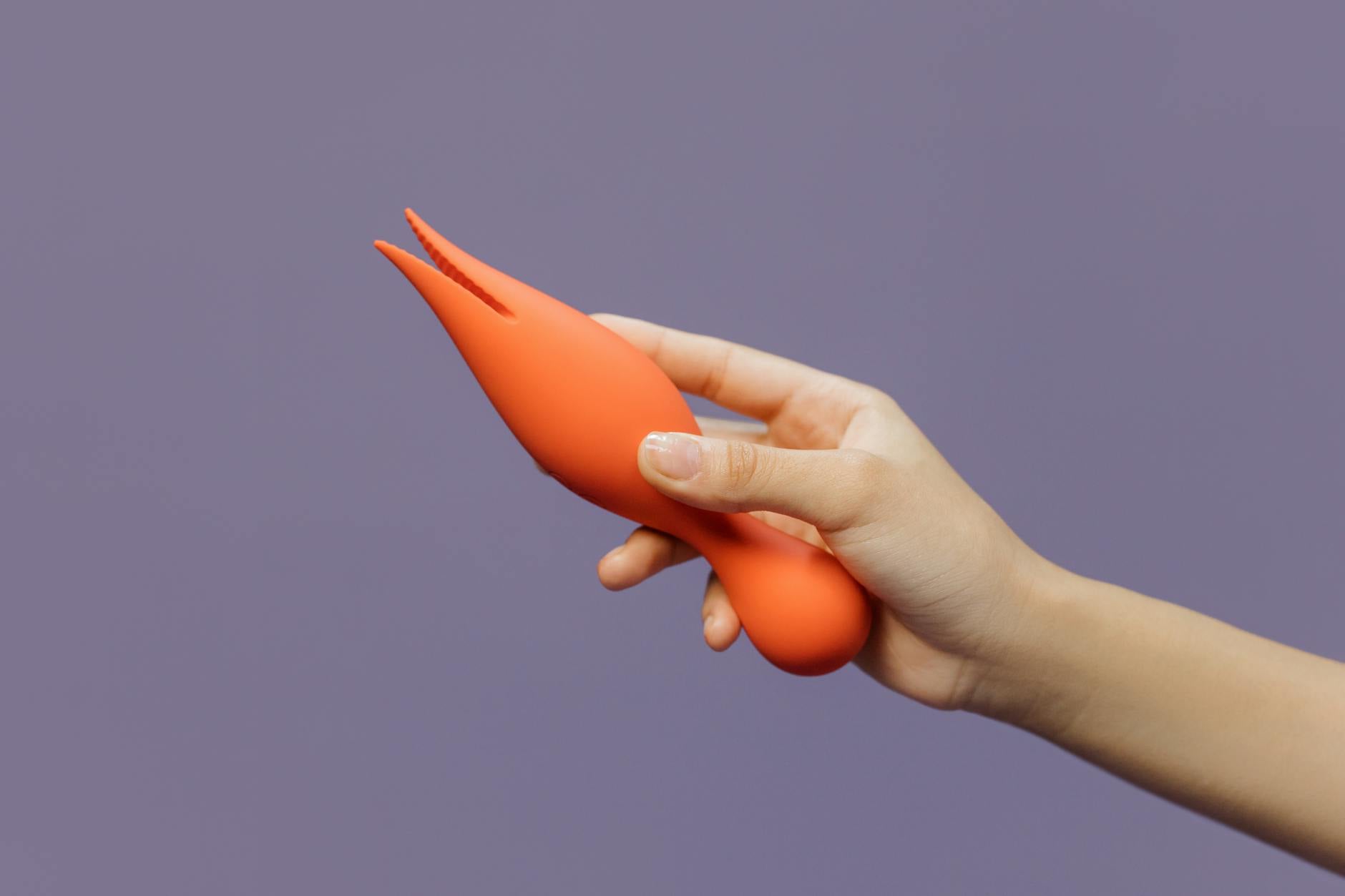
 Photo by cottonbro studio on Pexels
How air-suction technology bypasses the SSRI resistance
Traditional vibrators work through rhythmic stimulation. Lemon vibrators work differently. The Lem uses pulsed suction to stimulate the clitoral network without relying on the arousal cascade that SSRIs suppress. Here's why that matters.
When arousal is dampened by medication, the clitoral tissue responds more slowly to direct friction or conventional vibration. Your body isn't broken. It's just operating on a longer timeline, which can feel like nothing's happening. Air-suction stimulation works by creating micro-movements of tissue and activating nerve endings through a gentler mechanism that doesn't require your body's arousal system to be firing on all cylinders first.
In practical terms: you don't have to wait for arousal to build to feel something. The lemon clitoral vibrator creates sensation independently of your baseline arousal state, which means you can access pleasure even when SSRIs are holding the door closed on your natural response.
The intensity ramp and the SSRI advantage
Here's a counterintuitive benefit of being on SSRIs while using lemon vibrators. Because your baseline arousal is already lower, you can start with gentler patterns on the Lem (patterns 1-3) and feel distinct sensations you might not notice if your nervous system were already in high gear. Many women on SSRIs report that the lower arousal state actually makes it easier to focus on the sensations themselves, which can paradoxically lead to more deliberate, focused pleasure.
Then, as you move through the intensity levels, your body naturally catches up. You're not fighting against an arousal system that won't engage. You're building it deliberately, pattern by pattern. For many, this feels more sustainable and genuinely pleasurable than the push-hard-until-it-works approach.
Timing, lubrication, and working with your medication schedule
If you're taking your SSRI in the morning, your serotonin is typically highest in the afternoon and evening. Some women report slightly better arousal response (or less flattening) if they explore pleasure during windows when serotonin is stabilizing or dropping a bit. There's no magic time, but paying attention to your own cycle over a few weeks can reveal what works for your body.
Lubrication becomes even more important on SSRIs. Reduced arousal often means less natural lubrication, which compounds the sensation issue. Water-based lubricant isn't a workaround for the medication effect. It's a tool that helps the Lem's suction work more effectively. Apply generously, reapply as needed, and don't treat it as optional.
One more practical point: SSRIs can increase sensitivity to certain stimuli while decreasing sensitivity to others. If you've never used a lemon clitoral vibrator before and you're on an SSRI, start at pattern 1 and spend time there. Your nervous system may surprise you with how receptive it is, once you find the right entry point.
The mental game: patience and reframing pleasure
Here's where the work gets quieter but no less important. On SSRIs, pleasure often stops feeling automatic and starts requiring deliberate attention. That feels like a loss. In some ways, it is. But it's also an opportunity to rebuild how you think about pleasure.
Many women on SSRIs report that once they stop expecting arousal to arrive on the old schedule and instead approach pleasure as a skill to develop, they actually experience more satisfaction. The Lem becomes a tool for that learning process. You're not chasing an orgasm that won't come. You're exploring what sensation feels like now, in this neurochemical reality, with this body.
That shift from resentment to curiosity changes everything. And it often leads to outcomes that are genuinely different from pre-SSRI pleasure, but not necessarily worse.
When to talk to your prescriber about dose or switching
Here's the thing nobody says plainly enough: if sexual dysfunction from your SSRI is significantly affecting your quality of life or relationship, that's worth bringing up with your psychiatrist or GP. It's not complaining. It's reporting a side effect that matters to you.
Options include adjusting the timing of your dose, adding a low-dose medication that counteracts sexual side effects, or switching to a different antidepressant class that has lower sexual side effect rates. None of those conversations should feel like you're being disloyal to your mental health medication. Your mental health and your sexual health are both legitimate.
That said, many women find that using lemon adult toys like the Lem, combined with lubrication and the patience techniques above, creates a sustainable middle ground. The medication stays the same. The pleasure comes back differently. Both are wins.
FAQ: SSRIs, lemon vibrators, and getting sensation back
How long does it take for the Lem to make a difference if I'm on SSRIs?
Most women report noticing a difference within the first few sessions, especially once they find the right pattern and intensity for their current sensitivity. But the bigger shift often takes two to three weeks of regular exploration, as your brain learns the new sensation pathway. Consistency matters more than intensity.
Can I use a lemon clitoral vibrator if I've been on SSRIs for years and have zero sensation?
Yes. Long-term SSRI use can create stubborn numbness, but the Lem's air-suction mechanism often reaches nerve endings that conventional vibration misses. Start at pattern 1, use lubricant, and give it time. If you've had zero sensation for years, three sessions won't fix it. But many women report surprising responsiveness within a month of regular use.
Will using lemon vibrators make me dependent on them for orgasm?
No more than using a vibrator would on any other medication. The Lem doesn't rewire your nervous system. It provides external stimulation that your SSRI-dampened arousal system can respond to. When you explore without the device, your own capacity is still there. The vibrator is a tool, not a replacement.
Is it better to use a lemon sucker like the Lem, or switch to a traditional vibrator?
For SSRI-related flatness specifically, air-suction toys like the Lem work better for most women because they don't rely on your body's arousal cascade to create sensation. That said, everyone's nervous system is different. Some women find success with high-intensity wand vibrators instead. The principle is the same: finding stimulation that works around the medication's effect.
Should I tell my partner I'm using lemon sexual toys because of my SSRI side effects?
That depends on your relationship and your comfort. Some couples find that introducing a toy together is actually a conversation starter about how the medication has changed intimacy, and it becomes a collaborative thing. Others prefer to explore alone first. Neither is wrong. What matters is that you're not treating it as shameful or as a symptom of a relationship problem when it's actually a medication side effect.
Can I use the Lem while I'm still figuring out if my SSRI dose is right?
Absolutely. In fact, it can be helpful. Using the Lem gives you concrete feedback about how the medication is affecting your body, which can be useful information to bring to your prescriber. You're not fighting against the medication effect with your own effort. You're adapting to it while you work with your doctor on whether adjustments are needed.
The real takeaway
SSRIs have fundamentally changed mental health treatment for millions. The sexual side effects are real and frustrating and worth addressing. You don't have to choose between your mental health and your sexual pleasure. Lemon clitoral vibrators like the Lem are one part of a toolkit that includes conversations with your prescriber, lubrication, patience, and reframing how you think about pleasure itself.
Your arousal response on an SSRI is different from before. Different doesn't mean broken. And with the right tools and approach, it can be surprisingly pleasurable.
Have questions about how to get started or how the Lem works with your specific situation? Get in touch with our team.
Sources and further reading
Segraves RT, Balon R. "Antidepressant-induced sexual dysfunction in men and women." CNS Spectrums. 2003.
Mon DL, DeRogatis LR. "SSRI-induced sexual dysfunction: A systematic review and meta-analysis." Journal of Sex & Marital Therapy. 2005.
American Psychiatric Association. Diagnostic and Statistical Manual of Mental Disorders, Fifth Edition. Arlington, VA: American Psychiatric Publishing; 2013.