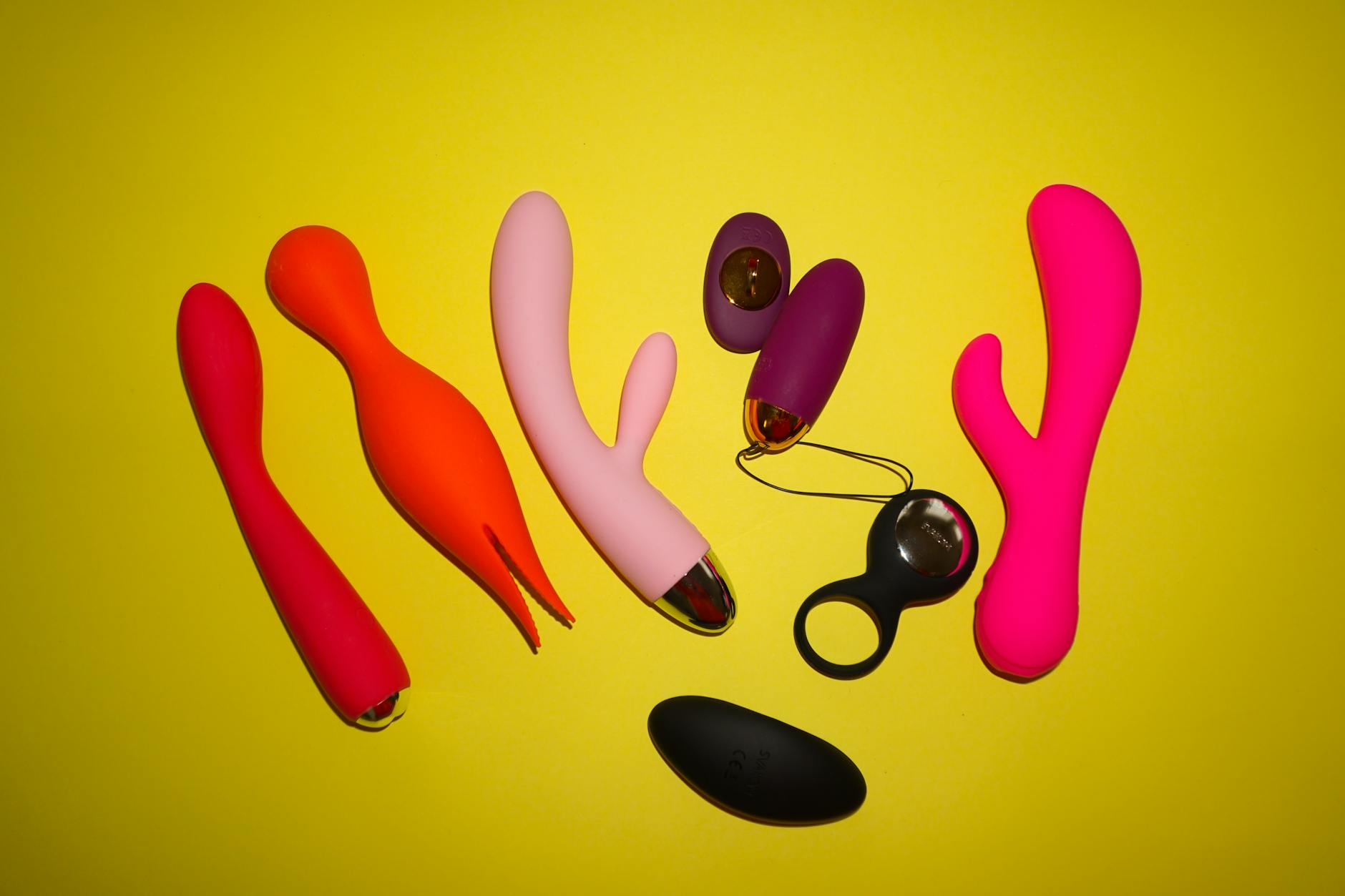
Let's talk about what happens to your body when you've been apart
Months or years away from a partner don't just create emotional distance. Your nervous system actually forgets. The anticipatory arousal that used to kick in automatically? It stalls. The sensitivity that used to build predictably? It flattens. Touch that once felt electric can feel almost foreign, even when the person hasn't changed and you still love them.
This isn't failure. It's neurobiology. And it's completely reversible.
The couples I work with who've navigated long separations often report the same thing: they want to reconnect intimately, but the pathway feels blocked. Desire is there. The emotional commitment is there. But the body has downregulated its response systems, and reactivating them takes more than just good intention.
Why lemon clitoral vibrators are different for reconnection
Most vibrators are designed for solo pleasure or for high-intensity stimulation. Lemon clitoral vibrators, by contrast, work through gentle suction that mimics natural oral stimulation. This matters enormously when you're rebuilding.
Here's why: suction-based stimulation doesn't require the kind of mental permission that direct vibration does. With a traditional vibrator, some part of your brain is still managing the experience, still aware that this is a toy and not your partner. With a lemon clitoral vibrator, the sensation is so close to organic touch that your nervous system stops overthinking and starts responding.
That shift is where reconnection actually begins.
The four stages of rebuilding physical intimacy
Stage 1: Relearning your own response. Before you can reconnect with a partner, your body needs to remember what arousal feels like on its own terms. This is where solo exploration with a lemon clitoral vibrator becomes essential. Not as a substitute for partnered sex, but as a diagnostic tool. You're reestablishing the neural pathways: stimulation leads to sensation leads to arousal leads to pleasure. With a tool like this, that loop often reactivates in weeks, not months.
Stage 2: Rebuilding trust with touch. Once your body remembers its own responsiveness, introducing touch from a partner becomes less scary. The lemon clitoral vibrator can stay in the picture here. Some couples use it together during foreplay, which removes performance pressure from both partners. You're not trying to make each other come. You're exploring sensation together. The distinction matters more than you'd think.
Stage 3: Expanding the window of arousal. After time apart, foreplay windows shrink. You might need 30 or 40 minutes of consistent stimulation to reach orgasm, when it used to take 15. This is normal. A lemon clitoral vibrator shortens that window without sacrificing depth. You can both invest the time you have without frustration blocking the process.
Stage 4: Deepening the connection through vulnerability. By this point, you've both used the tool enough to talk about what you actually like. That conversation, grounded in real experience rather than assumption, is where real reconnection lives.
What makes reconnection after separation different from other intimacy rebuilding
When a couple stops having sex because of life stress, medical issues, or relationship conflict, there's usually an identifiable problem to solve. Surgery heals. Medication adjusts. Therapy untangles the resentment. Reconnection after years apart is different. The problem is neurological forgetfulness, not pathology.
Your body didn't stop responding because something broke. It stopped responding because the stimulus disappeared. Reintroduce the stimulus, and the response often returns quickly. But reintroduce it too aggressively, and you can trigger anxiety instead of arousal. This is where the gentleness of lemon clitoral vibrators becomes crucial.
They provide consistent, predictable stimulation at a range of intensities. You can start at pattern one (which feels almost like a tease) and stay there as long as you need, until your nervous system softens and arousal actually builds. Then you can climb. No pressure. No surprise. No performance anxiety.
How to introduce this conversation with your partner
Honestly, the hardest part of reconnection isn't the sex itself. It's saying out loud: "I want us to figure this out together, and I need some help." Here's what works in my practice:
Pick a calm moment, not during any kind of physical intimacy attempt. Say something like: "I miss what we had physically, and I want to rebuild that without the pressure of making it perfect right away. There's a tool that might help us both feel less self-conscious while we figure this out." Then show them. Let them hold it. No mystery. No shame.
Most partners are relieved. They've been worried too. They just didn't know how to start the conversation either.
The role of patience (and why it matters more than passion)
This is going to sound counterintuitive, but the couples who successfully reconnect after years apart aren't the ones who try to jump straight back to how it was. They're the ones who treat it like learning to dance together for the first time.
You're going to feel awkward. You're going to laugh. You're going to need to stop and talk sometimes. A lemon clitoral vibrator in the mix actually reduces that awkwardness because neither person is solely responsible for the other's pleasure. There's a third participant (the tool), which somehow makes it easier to be vulnerable.
Take your time. Give your nervous systems space to remember. If it takes three months of gradual reconnection before penetrative sex feels natural again, that's not slow. That's wise.
Common fears people voice (and why they're not what you think)
"Will my partner feel replaced?" No. If anything, the lemon clitoral vibrator signals to your partner that you're prioritizing your shared pleasure, not outsourcing it. Most partners feel wanted when you show up that intentionally.
"What if we use it and nothing happens?" Then you've gathered useful information. Maybe you need more time. Maybe there's a separate emotional block that needs a different kind of work. But nothing fails here. Everything informs.
"Isn't this admitting we're broken?" You're not broken. You're human. Long separations change bodies and nervous systems. Using a tool designed specifically for gentle reconnection is smart, not desperate.
Practical logistics that make reconnection easier
Set a dedicated time. Not "sometime this weekend," but Tuesday at 8 PM. Treat it like a date, because it is. Dim the lights. Charge the lemon clitoral vibrator fully beforehand so you're not negotiating a low-battery situation mid-scene. Have lubricant nearby. Agree in advance on a simple signal (like "slow down" or "pause") so stopping doesn't feel like failure.
These practical details matter more than ambiance. Your nervous system calms down when it knows what to expect.
Including your own experience in this process is important too. If you've been apart for years, you might explore alone first with lemon clitoral vibrators designed for sensitivity rebuilding. Understanding your own baseline will help when it's time to reconnect as a couple. You'll know what to ask for.
The reconnection timeline people actually experience
Week 1-2: Relearning alone feels awkward. That's normal.
Week 3-4: Your body starts remembering. Arousal builds faster.
Week 5-8: You introduce your partner. The first few times are still tentative. You're both nervous. This is fine.
Week 9-12: The tool becomes less central and the connection becomes more central. You're having sex that feels like sex again, not like a project.
Week 13 onward: The lemon clitoral vibrator might stay as an occasional addition, or it might fade into the background. Either way, the reconnection work is done. You've reestablished the neural and emotional pathways that time apart had dormant.
Some couples reconnect faster. Some take longer. The timeline matters far less than the fact that you're moving.
When reconnection gets stuck and what to do
If after eight weeks you're not seeing movement, something else might be in play. Maybe there's unresolved resentment about the separation. Maybe one partner has a different vision for what reconnection should look like. Maybe there's performance anxiety layered underneath.
This is when a relationship therapist becomes valuable. A lemon clitoral vibrator is a tool for reawakening physical response. It's not a substitute for addressing emotional blocks. But it's also not the thing to blame if things stall.
Talk to each other first. Be specific. Then, if you need it, reach out for professional support. Most couples who've been apart find that a few sessions of focused therapy, combined with the gradual physical reconnection, brings everything back online.
Why reconnection matters more than you think
Physical intimacy isn't just sex. It's the nervous system's way of saying: "I trust you enough to be vulnerable with you. I want you. I choose you." After years apart, rebuilding that signal rebuilds something deeper in the relationship.
Your partner doesn't need you to be the same person who left. You don't need to rediscover some "lost" spark. You just need to rebuild the physical pathway that says: we're here, we're choosing this, we still want each other. A lemon clitoral vibrator can be the smallest, gentlest entry point to that rebuilding. Let it be.
People also ask
Is it weird to use a toy if we're trying to reconnect after being apart?
Not even slightly. If anything, it's the opposite of weird. Using a tool designed for gentle, consistent stimulation removes ego from the equation and puts the focus on sensation and connection, not performance. Couples who use clitoral vibrators during reconnection often report less pressure and more actual pleasure.
How long does it usually take for physical intimacy to feel normal again?
Depends on how long you were apart and what caused the separation. Most couples see meaningful shifts within 8-12 weeks of consistent, gentle reconnection. Some see it faster. A few need longer. The speed matters less than the direction. If you're moving toward each other, you're doing it right.
What if my partner is embarrassed about using a lemon clitoral vibrator?
Start the conversation outside the bedroom entirely. Normalize it as a tool, not a judgment. Many people feel less embarrassed once they understand the physiology: your nervous system needs retraining after long absence, and this tool helps that process efficiently. If they're still uncomfortable, try a different entry point. But don't sacrifice your reconnection because of shame that will probably dissolve once you both experience how much this helps.
Can we reconnect without using any tools?
Yes, absolutely. Some couples do. But it usually takes longer and feels more frustrating because your bodies are genuinely less responsive after time apart. A lemon clitoral vibrator isn't a requirement. It's a shortcut that many couples find valuable. Choose based on what feels right for you both, not on what you think you "should" do.
What if we use it and still don't feel connected?
Then there's probably something else worth exploring. Maybe the separation fractured emotional trust that needs to heal first. Maybe there's unspoken resentment. Maybe you both need to clarify what reconnection actually means to you. A tool can help you reconnect physically, but it can't fix relational ruptures. If the emotional part is still broken, address that alongside the physical reconnection.
Is it better to use a lemon clitoral vibrator alone first or together?
Alone first is usually easier. Your nervous system can relearn its own capacity without the pressure of someone else watching or waiting. Once you've reestablished your baseline, introducing it together becomes less loaded. You're not starting from complete numbness. You're building on something that's already starting to wake up.